Apigenin is a plant compound found in chamomile, parsley and celery. For sleep, people usually take 50 mg about 30 to 60 minutes before bed, the dose from Andrew Huberman's sleep stack. Whether apigenin for sleep works is still unproven. No trial has tested it on its own, the chamomile trials that contain it are small and mixed, and the one trial of a 50 mg apigenin blend, published in October 2026, found no sleep benefit in healthy adults. If you want to try it, take it alone for a week and judge for yourself.
Health note: apigenin is a supplement, not a treatment for insomnia or any sleep disorder. If you take medication, use hormone therapy, are pregnant or breastfeeding, or are under 18, check with your doctor first.
TL;DR
- In a 1995 lab and mouse study, apigenin bound the benzodiazepine site on the GABA-A receptor and made mice less anxious without sedating them.
- No trial has tested apigenin alone for sleep. Most of the human research used chamomile extract.
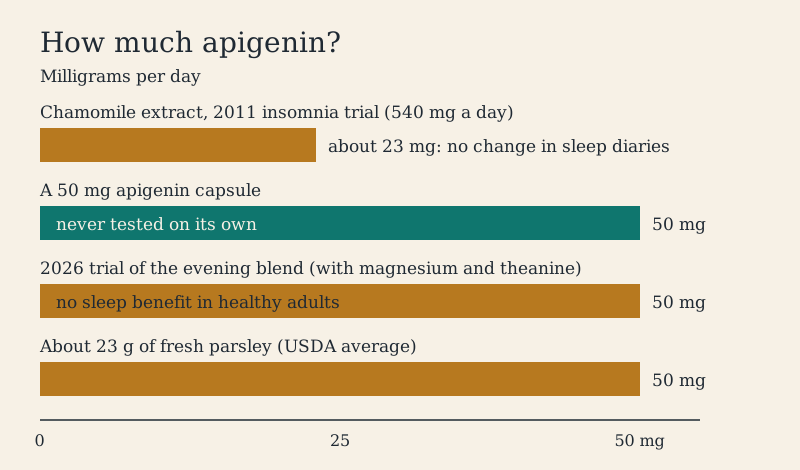
- The best-measured chamomile trial gave about 23 mg of apigenin a day, and sleep diaries didn't differ from placebo. A 50 mg capsule is roughly double that.
- A 2026 trial of a blend matching Huberman's evening stack (magnesium threonate, theanine and 50 mg apigenin) found no change in sleep-disturbance scores over two weeks.
- Apigenin blocks the enzyme that makes estrogen in lab tests, and Huberman says women who want to keep their estrogen where it is should probably avoid it.
What apigenin does in the brain
The GABA-A receptor connection
The GABA-A receptor is where benzodiazepines such as Valium act. In 1995, researchers in Buenos Aires isolated apigenin from chamomile flowers and found it bound the benzodiazepine site on that receptor. In mice, doses similar to those used for benzodiazepines made the animals less anxious without sedating them or relaxing their muscles. Ten times the dose made them mildly sedated.
That study used lab tissue and mice. A 2000 rat study found apigenin's sedative effect didn't run through the benzodiazepine site, and it saw no anti-anxiety effect, so even the mechanism isn't settled. Nobody has tested dependence, withdrawal or next-morning grogginess in people.
Why it may suit a racing mind
In a Huberman Lab clip on sleep supplements, Huberman calls apigenin mildly anxiety-lowering, which he says helps people "turn off their thinking or to be able to reduce the amount of ruminating and problem-solving and future anticipation" before sleep.
That's his explanation, and no trial has tested it. The use case it points to is a tired body with a busy head. If the problem is pain, sleep apnea or a body clock that's out of sync, nothing about apigenin's proposed mechanism addresses it, and those are worth raising with a doctor.
Cortisol and NAD+: lab and mouse results only
In a 2002 study of human adrenal tumour cells grown in a dish, apigenin cut cortisol output by 47.5%. That's a cell result at a fixed concentration, and nobody has measured whether a capsule lowers cortisol in people.
Apigenin also blocks CD38, an enzyme that breaks down NAD+. In obese mice injected with apigenin, NAD+ in the liver nearly doubled. That's longevity research, and it hasn't been linked to sleep.
What the research says (and what it doesn't)
The chamomile extract trials
Most human data on apigenin comes from chamomile extract, which also contains other active compounds.
- Older adults. In a 2017 single-blind trial, 60 nursing-home residents aged 60 and over took 200 mg of chamomile extract twice a day for 28 days, or flour capsules. Sleep quality scores were significantly better in the chamomile group afterwards.
- Chronic insomnia. In a 2011 pilot, 34 adults with insomnia lasting six months or more took 270 mg twice a day or a placebo for 28 days. Sleep diaries showed no significant difference in sleep time, time to fall asleep, night waking or sleep quality. Daytime functioning was slightly better, but not significantly.
- The meta-analysis. A 2019 review of 12 trials found chamomile improved sleep quality and generalized anxiety. Only one trial measured insomnia, and it found no change.
How much apigenin those trials used
Chamomile extract is often about 1% apigenin by weight. The 2011 insomnia trial measured its own: 3.9 mg of apigenin per 90 mg of extract. At 540 mg a day, that's about 23 mg of apigenin daily, from the equivalent of 15 g of chamomile flowers. The researchers noted that much couldn't feasibly be delivered as tea. A 50 mg capsule gives roughly twice that dose, and the trial didn't change sleep diaries.
The first trial of a 50 mg apigenin blend
A placebo-controlled trial published in October 2026 enrolled 103 healthy, physically active adults. One group of 25 took a blend matching Huberman's evening stack, 145 mg of magnesium from magnesium threonate, 200 mg of L-theanine and 50 mg of apigenin, for two weeks. Another 25 took the same blend plus morning supplements. The evening-only group's sleep-disturbance scores and perceived stress didn't differ from placebo. The study was funded by Momentous, which also made the capsules.
Two weeks is short, and these were healthy adults without clinically significant sleep problems. It's still the only controlled data on a 50 mg dose, and it found no sleep benefit.
The Italian diet study
A study of 1,936 adults in southern Italy used food questionnaires and found that people who ate more apigenin reported better sleep quality. The link was stronger in normal-weight people and absent in people who were overweight. It's an association, so it can't show that apigenin caused the better sleep.
5 ways to use apigenin for sleep
Method 1: chamomile tea before bed (lowest commitment)
Chamomile is the form with the most human research, even if the trials used extract rather than tea. There's no reliable figure for how much apigenin a cup contains. The insomnia trial's daily dose matched more chamomile than anyone could drink as tea, so expect much less than a capsule.
Method 2: a standalone 50 mg apigenin supplement
Take 50 mg, 30 to 60 minutes before bed. That's the dose and timing in Huberman's 2021 "Toolkit for Sleep" newsletter. In his 2022 Sleep Toolkit episode he calls 30 to 60 minutes ideal, "especially if you haven't had anything to eat for the three hours or so before bedtime." No study has tested whether food changes how much apigenin you absorb.
Absorption is low either way. A 2024 review puts it at 5 to 10% in the small intestine, with the other 90 to 95% reaching the colon, where gut bacteria break much of it down. Capsules aren't always made from chamomile. The apigenin in the 2026 trial came from grapefruit.
Huberman suggests testing one supplement at a time. In the clip quoted above, he says you could "try magnesium threonate for a week then switch to only apigenin for a week and evaluate which one works better for you." A week of apigenin alone tells you whether you fall asleep faster or ruminate less. If nothing changes, stop.
Method 3: the Huberman sleep stack
Huberman's core stack is 145 mg magnesium threonate, 50 mg apigenin and 100 to 400 mg L-theanine, 30 to 60 minutes before bed. Huberman's sleep cocktail covers the full rotation and the evidence for each ingredient.
He warns that theanine gives some people dreams vivid enough to wake them, even at 100 mg, and his fix is to drop the theanine and keep the other two. Bear in mind that the 2026 trial tested almost exactly this combination and found no sleep benefit in healthy adults.
Method 4: food first
If you'd rather skip capsules, these are the USDA averages for apigenin in food:
- Fresh parsley: about 215 mg per 100 g
- Dried parsley: about 4,500 mg per 100 g
- Raw celery: under 3 mg per 100 g
At the USDA average, 50 mg of apigenin is about 23 g of fresh parsley. The only food-level evidence is the Italian association study above.
Method 5: apigenin as one layer in a full sleep protocol
Supplements sit on top of the basics, not in place of them. For chronic insomnia, the American College of Physicians recommends cognitive behavioural therapy for insomnia (CBT-I) as the first treatment. How to sleep better covers the daily habits that come before any capsule.
Heat is another option. In a 2019 meta-analysis, a warm bath or shower at 40 to 42.5 °C, taken 1 to 2 hours before bed for as little as 10 minutes, helped people fall asleep faster.
If a busy mind is what keeps you up, a guided session may help you downshift without adding anything to swallow. NSDR for sleep explains how it fits into a bedtime routine.
Which approach should you choose?
If a racing mind keeps you awake, try Method 2 for a week, alone. If it does nothing, glycine for sleep works through a different route.
If you're unsure about supplements, start with chamomile tea or parsley. Huberman's own newsletter advice is to "start with one supplement (or none!)" and add one at a time.
If you've had poor sleep for months, see a doctor about CBT-I first.
Safety, side effects, and who should be cautious
What the trials reported
In the 2011 insomnia trial, side effects were no more common on chamomile than on placebo, and the 2019 meta-analysis found only mild side effects, reported in three trials. The clean record partly reflects how little testing there has been.
Medication
Apigenin binds the same receptor site as benzodiazepines in lab tests. If you take a sleeping pill, a benzodiazepine or other sedative, anxiety medication, a blood thinner or hormone therapy, ask your doctor before adding it. These interactions haven't been tested in people.
The estrogen question
In a 1984 lab study, apigenin blocked aromatase, the enzyme that turns testosterone into estrogen, in human placental and ovarian tissue. No human trial has checked whether a 50 mg capsule changes estrogen levels.
Huberman goes further. In his "Master Your Sleep" episode he calls apigenin "a fairly potent estrogen inhibitor" and says women who want to keep their estrogen levels where they are should probably avoid it altogether. Men need estrogen too, he adds.
FAQ
Does apigenin actually help with sleep?
Apigenin hasn't been shown to help sleep in people. It made mice less anxious in lab work, and chamomile extract improved sleep quality scores in older adults, but the only trial of a 50 mg apigenin blend found no sleep benefit in healthy adults over two weeks. A one-week test on yourself is the practical way to find out.
How much apigenin should I take for sleep?
For sleep, take 50 mg of apigenin 30 to 60 minutes before bed if you try it. That's Huberman's figure, no trial has tested it alone, and he says the timing is ideal if you haven't eaten for about three hours. There's no evidence that 100 or 200 mg works better.
Is apigenin safe to take every night?
Longer-term daily use has only been studied as chamomile extract. In a 2016 anxiety trial, people took 1,500 mg of extract a day for 12 weeks, and half of those who responded stayed on it for up to 26 more weeks, with side-effect rates similar to placebo. Nobody has tested a nightly 50 mg apigenin capsule for months. Because it blocks estrogen production in lab tests, women, anyone on hormone therapy and anyone on sedatives should check with a doctor before nightly use.
What is the best form of apigenin for sleep?
The form with the most human research is chamomile extract. A 50 mg capsule gives the most apigenin per dose, and fresh parsley and chamomile tea give smaller amounts. No trial has compared the forms with each other.
How does apigenin compare to melatonin?
Apigenin and melatonin work on different systems. Melatonin is a hormone that makes you sleepy, and in a meta-analysis of 19 studies (1,683 people) it helped people fall asleep about 7 minutes faster. Apigenin acts on GABA-A receptors in lab studies and has no comparable trial. Huberman says he prefers his supplement stack to melatonin.
Sources
- Viola H, Wasowski C, Levi de Stein M, et al. 1995. Apigenin, a component of Matricaria recutita flowers, is a central benzodiazepine receptors-ligand with anxiolytic effects. Planta Medica. https://pubmed.ncbi.nlm.nih.gov/7617761/ [lab and mouse study]
- Kramer DJ, Johnson AA. 2024. Apigenin: a natural molecule at the intersection of sleep and aging. Frontiers in Nutrition. https://pubmed.ncbi.nlm.nih.gov/38476603/ [review; authors employed by Tally Health]
- Ohno S, Shinoda S, Toyoshima S, et al. 2002. Effects of flavonoid phytochemicals on cortisol production and on activities of steroidogenic enzymes in human adrenocortical H295R cells. Journal of Steroid Biochemistry and Molecular Biology. https://pubmed.ncbi.nlm.nih.gov/11948020/ [cell study]
- Escande C, Nin V, Price NL, et al. 2013. Flavonoid apigenin is an inhibitor of the NAD+ase CD38: implications for cellular NAD+ metabolism, protein acetylation, and treatment of metabolic syndrome. Diabetes. https://pubmed.ncbi.nlm.nih.gov/23172919/ [mouse study]
- Adib-Hajbaghery M, Mousavi SN. 2017. The effects of chamomile extract on sleep quality among elderly people: a clinical trial. Complementary Therapies in Medicine. https://pubmed.ncbi.nlm.nih.gov/29154054/
- Zick SM, Wright BD, Sen A, Arnedt JT. 2011. Preliminary examination of the efficacy and safety of a standardized chamomile extract for chronic primary insomnia: a randomized placebo-controlled pilot study. BMC Complementary and Alternative Medicine. https://pubmed.ncbi.nlm.nih.gov/21939549/
- Hieu TH, Dibas M, Surya Dila KA, et al. 2019. Therapeutic efficacy and safety of chamomile for state anxiety, generalized anxiety disorder, insomnia, and sleep quality: a systematic review and meta-analysis of randomized trials and quasi-randomized trials. Phytotherapy Research. https://pubmed.ncbi.nlm.nih.gov/31006899/
- Mastrofini GF, Romersi RF, Lombardi MG, et al. 2026. Modulating stress and sleep through a multi-compound dietary supplement: a randomized, double-blind, placebo-controlled trial. Journal of the International Society of Sports Nutrition. https://pubmed.ncbi.nlm.nih.gov/42829807/ [funded by Momentous]
- Zanoli P, Avallone R, Baraldi M. 2000. Behavioral characterisation of the flavonoids apigenin and chrysin. Fitoterapia. https://pubmed.ncbi.nlm.nih.gov/10930722/ [rat study]
- Mao JJ, Xie SX, Keefe JR, et al. 2016. Long-term chamomile (Matricaria chamomilla L.) treatment for generalized anxiety disorder: a randomized clinical trial. Phytomedicine. https://pubmed.ncbi.nlm.nih.gov/27912875/
- Godos J, Ferri R, Castellano S, et al. 2020. Specific dietary (poly)phenols are associated with sleep quality in a cohort of Italian adults. Nutrients. https://pubmed.ncbi.nlm.nih.gov/32357534/
- Kellis JT, Vickery LE. 1984. Inhibition of human estrogen synthetase (aromatase) by flavones. Science. https://pubmed.ncbi.nlm.nih.gov/6474163/ [lab study]
- US Department of Agriculture. 2011. USDA Database for the Flavonoid Content of Selected Foods, Release 3. https://www.ars.usda.gov/ARSUserFiles/80400525/Data/Flav/Flav_R03.pdf
- Qaseem A, Kansagara D, Forciea MA, Cooke M, Denberg TD. 2016. Management of chronic insomnia disorder in adults: a clinical practice guideline from the American College of Physicians. Annals of Internal Medicine. https://pubmed.ncbi.nlm.nih.gov/27136449/
- Haghayegh S, Khoshnevis S, Smolensky MH, Diller KR, Castriotta RJ. 2019. Before-bedtime passive body heating by warm shower or bath to improve sleep: a systematic review and meta-analysis. Sleep Medicine Reviews. https://pubmed.ncbi.nlm.nih.gov/31102877/
- Ferracioli-Oda E, Qawasmi A, Bloch MH. 2013. Meta-analysis: melatonin for the treatment of primary sleep disorders. PLoS ONE. https://pubmed.ncbi.nlm.nih.gov/23691095/
- Huberman A. 2021. Toolkit for Sleep. Huberman Lab Neural Network newsletter, 20 September 2021. https://www.hubermanlab.com/newsletter/toolkit-for-sleep
- Huberman A. 2022. Sleep Toolkit: Tools for Optimizing Sleep & Sleep-Wake Timing. Huberman Lab podcast, 8 August 2022. https://www.hubermanlab.com/episode/sleep-toolkit-tools-for-optimizing-sleep-and-sleep-wake-timing
- Huberman A. 2021. Master Your Sleep & Be More Alert When Awake. Huberman Lab podcast, 11 January 2021. https://www.hubermanlab.com/episode/master-your-sleep-and-be-more-alert-when-awake
- Huberman Lab Clips. Best Supplements for Improving Sleep | Dr. Andrew Huberman. YouTube. https://www.youtube.com/watch?v=Se151brgGSM