Allostatic load is the wear and tear that builds up in your body when the stress response switches on too often or doesn't switch off. Bruce McEwen and Eliot Stellar named it in 1993. Researchers measure it by combining a handful of markers: stress hormones, blood pressure, waist size, cholesterol and blood sugar. The mechanism tells you what to do about it. If load builds when the stress response stays on, recovery means getting it to switch off, and an evening on the sofa doesn't always do that.
What is allostatic load?
McEwen, a neuroendocrinologist at Rockefeller University, and Stellar defined the term in a 1993 paper in Archives of Internal Medicine. They wanted a name for "the hidden toll of chronic stress on the body", which the older idea of homeostasis didn't explain.
Your body can handle a hard day, but it spends something to do it. Allostatic load is the running total.
Jennifer Dragonette, PsyD, a clinical services instructor at Newport Healthcare, sums up the problem: "We're not made to sustain the stress response for more than short periods of time."
Allostasis vs allostatic load
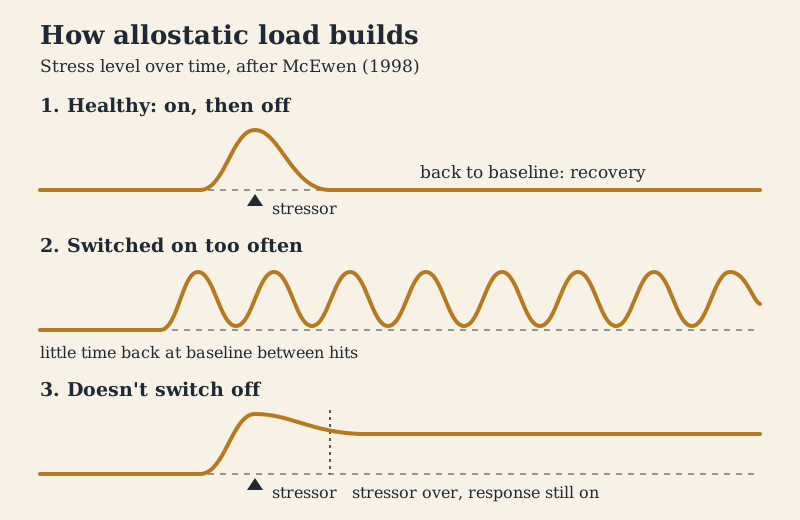
Allostasis is the adapting itself. McEwen and John Wingfield describe it as "maintaining stability through change". Your heart rate rises, hormones shift and your attention narrows so you can meet a challenge. That's healthy. McEwen wrote that when these systems are "turned on and turned off again efficiently and not too frequently", the body copes well with challenges it might not otherwise survive.
Allostatic load is what accumulates when that on-off cycle goes wrong.
How stress becomes wear and tear
Two systems carry most of the stress response. The SAM axis (sympathetic-adrenal-medullary) releases adrenaline and noradrenaline. The HPA axis (hypothalamic-pituitary-adrenal) releases cortisol. Both are meant to fire, do their job and stand down.
McEwen described three ways the load builds:
- The stress response switches on too often.
- It switches on and then fails to switch off after the stress is over.
- It responds too weakly, so other systems overcompensate.
Over long periods, McEwen argued, that cost can lead to disease. Later research has mostly backed him. A 2021 systematic review of 267 studies found that higher allostatic load was linked to poorer physical and mental health.
Allostatic load vs allostatic overload
Load is the accumulating cost, and you can carry it while still functioning. Allostatic overload is the point where, in McEwen and Wingfield's words, "serious pathophysiology can occur". The cost has outrun your ability to cope, and disease takes hold.
They describe the human version as plenty of food plus social conflict that never lets up. It triggers no escape response, and they wrote that it can only be countered "through learning and changes in the social structure", which means changing how you respond or changing the situation.
How allostatic load accumulates in your body
The stress response evolved for short physical threats. Most of what sets it off today is psychological and long-lasting.
Why psychological stress lingers
Robert Sapolsky, a Stanford neurobiologist who has studied stress in wild baboons in Kenya, describes stress for most animals as "three minutes of screaming terror on the savannah". After that it's over, one way or the other.
People run the same response for deadlines and money worries, which don't resolve in three minutes. In his Stanford video "Stress Response: Savior to Killer", Sapolsky argues that when the response keeps running over psychological worries like these, it ends up doing more damage than the stressor.
What the original 10 markers measured
Teresa Seeman, McEwen and colleagues built the first allostatic load index in 1997, using data from the MacArthur studies of older adults. It had 10 measures:
- four hormones from the stress system: cortisol, adrenaline (epinephrine), noradrenaline (norepinephrine) and DHEA-S
- systolic and diastolic blood pressure
- waist-hip ratio
- total and HDL cholesterol
- HbA1c, a longer-term blood sugar marker
Each measure in the highest-risk quarter scored a point. Higher scores went with poorer thinking and physical function and more cardiovascular disease. The original list has no inflammation marker. Later indexes added C-reactive protein (CRP) and others, which is one reason studies don't always agree.
Stress, telomeres and the hippocampus
Telomeres, the protective caps on your chromosomes, shorten with age. A 2004 study looked at 58 mothers, some caring for a chronically ill child. The women with the highest perceived stress had telomeres shorter by the equivalent of at least a decade of extra ageing compared with the least stressed. Among the caregivers, more years of caregiving went with shorter telomeres. It was one small study at a single point in time, so it can only show a link.
Reviews also link chronic stress to changes in the hippocampus, the brain region involved in memory. In animal studies, that includes fewer new neurons being formed.
The Whitehall studies: why control matters
In the first Whitehall study of British civil servants (17,530 men), the lowest-grade workers had 3.6 times the heart-disease death rate of the highest-grade administrators. Smoking, blood pressure and cholesterol explained only part of that gap.
Whitehall II, with 10,308 men and women, looked at why the gap exists. People who reported low control over their work at two check-ups had nearly twice the odds of a later coronary event (odds ratio 1.93) compared with people who had high control both times. Grade and classic risk factors didn't explain it. Job demands weren't linked to heart disease at all.
Whitehall measured heart disease, not an allostatic load score, but it fits the model: stress you can do nothing about keeps the system switched on.
Signs of high allostatic load
Allostatic load has no validated symptom list. It's a research framework, and the signs people describe are common and have many causes.
What people notice
Poor sleep, irritability and feeling overwhelmed are the signs usually listed. In older adults, Seeman's team found higher scores went with poorer thinking and physical function. Waist size is in the index too.
None of these tells you your load is high. Persistent fatigue, low mood, chest pain or raised blood pressure need a doctor, because they have plenty of other causes.
A gym analogy
Rían Doris, who runs the performance-coaching company Flow Research Collective, explains load with bicep curls. Do curls endlessly with no rest and eventually you can't lift a water bottle off your desk. Rest between sessions and the muscle comes back stronger.
What clears allostatic load (and what doesn't)
Relaxation is one kind of recovery. What a night of TV can miss is detachment, and that's where Doris's slogan holds up.
Is relaxation recovery?
Doris argues that an evening on the couch with Netflix "feels like recovery" but is "merely relaxation". That's a coach's view. No study has measured allostatic load after a night of TV.
Research on recovery from work is more specific. Sabine Sonnentag and Charlotte Fritz, in a 2007 study of 930 people, separated four recovery experiences:
- psychological detachment, meaning you stop thinking about work
- relaxation
- mastery, meaning something challenging that you're learning or getting better at
- control over what you do with your time
So relaxation counts, and detachment is the piece to check. A film you're lost in can give you that. Scrolling the news, or checking work messages from the sofa, keeps the stressor running in your head while your body sits still. Ask of any evening whether it takes your mind off the thing that's stressing you.
Recovery practices with evidence
These tools have at least some direct data. No study has shown any of them lowering an allostatic load score on its own.
NSDR. NSDR is a guided body scan done lying down, usually 10 to 20 minutes. Only four trials use the name. In the largest, 102 active young adults did one 10-minute session, and heart rate fell slightly more than in the control group. The authors called the physiological effects modest. In another trial, a 10-minute session showed no effect next to a 25-minute nap. You stay awake, so there's no grogginess, and a session has a set start and end you can fit into any day.
Slow breathing with a longer exhale. A 2022 review of 223 studies found that slow breathing raises heart rate variability, a marker of vagus nerve activity, during a session and straight after it. Making the exhale longer than the inhale adds to that, but only when the breathing is slow. In a month-long Stanford trial, 5 minutes a day of exhale-focused cyclic sighing improved mood more than mindfulness meditation. Heart rate variability didn't differ between the groups.
Time outside. In a 2019 study of 36 city dwellers, a nature break cut salivary cortisol by 21.3% an hour beyond its normal daily fall. Twenty to 30 minutes gave the most for the time spent.
Cold water. Doris says sitting in an ice bath is "the least relaxing thing you could possibly imagine doing", and that an hour later your load is lower. Nobody has measured that. In a 2000 study of young men, an hour in 14°C water raised noradrenaline by 530%, and cortisol didn't rise. Treat cold as optional.
For these tools in a set order, see the step-by-step nervous system reset.
How to tell if your recovery is working
Lower heart rate variability goes with several allostatic load markers, including higher HbA1c, higher overnight cortisol and more inflammatory proteins. A falling trend is worth noticing, and a rising one is a reasonable sign that your recovery is helping.
Doris adds a subjective test: a good session should feel "like you've had a mini vacation". Both are rough gauges.
How to measure your allostatic load
No lab gives you a score
You can't order an allostatic load test, and researchers still don't agree which markers belong in one. A 2023 analysis of 13 cohorts called that lack of consensus the concept's "most intractable problem".
The five-marker shortcut
The same analysis found that a short index of five ordinary measures predicted death as well as, or better than, the longer panels:
- CRP (inflammation)
- resting heart rate
- HDL cholesterol
- waist-to-height ratio
- HbA1c
CRP, HDL and HbA1c come from a blood test your doctor can order. You can measure the other two at home. Any wearable gives resting heart rate, or you can count your pulse first thing in the morning. Waist-to-height ratio is your waist measurement divided by your height. Tracked over months, the five give you a reasonable picture.
Tracking HRV at home
Heart rate variability isn't in any standard allostatic load index, but it's the easiest daily signal of how switched-on your stress system is, and wearables such as Oura, Apple Watch and Whoop report it.
Don't compare your number with anyone else's. A review of 44 studies and more than 21,000 people found no agreed normal range, and huge differences between individuals. Compare yourself with yourself, using the same device at the same time of day, and watch the trend over weeks.
A protocol for reducing allostatic load
The direct evidence is thin, so this plan sticks to things with their own data and labels the rest.
Daily: one real switch-off
Give the stress response one clear off period a day. A 10 to 20 minute NSDR or yoga nidra session suits this because it needs no kit and has a defined end. In a 2025 trial, 11 minutes of online yoga nidra, ideally daily for two months, went with lower total cortisol and a steeper fall in cortisol across the day. The effects were small, and short daily practice is what the trial tested.
Sleep comes first, though. The American Academy of Sleep Medicine and Sleep Research Society say adults should sleep 7 or more hours a night. In a study of 1,023 adults, both short and long sleepers had higher multi-system biological risk than people sleeping a normal amount.
Weekly: fix the biggest drain
Look at what keeps the system on. If it's sleep, treat the sleep problem. In a pilot trial of 109 older adults with insomnia, four months of CBT for insomnia, or of tai chi, left those who started out high-risk with a lower multi-biomarker risk score a year later than a sleep-education group.
If it's a situation you can't control, look for any control you can get back. In Whitehall II, low control predicted heart disease and job demands didn't. That might mean more say in how your work is done, or one fixed boundary you set yourself.
Doris recommends stacking several recovery practices into one day each week. It's a coaching rule that nobody has tested.
Over months: watch the trend
A 2020 review found only six intervention studies that used allostatic load as the outcome. Four lowered the score, some within 7 weeks. Give any change two months, then check your resting heart rate, waist and HRV trend, and how you feel.
Doris also suggests longer recovery breaks each month and quarter. That's his rule and untested, though his summary holds up: "recovery is part of the work".
FAQ
What is the difference between allostatic load and regular stress?
Regular stress is the response itself: it switches on, you deal with the problem, it switches off. Allostatic load is the cost that builds when that cycle runs too often or doesn't finish.
How long does it take to reduce allostatic load?
Expect weeks to months. In the few intervention studies that used allostatic load as the outcome, the quickest drops showed up after about 7 weeks. A single NSDR session or breathing practice changes how you feel that day, and nobody has shown it changes your load score.
Can you measure allostatic load at home?
Partly. No home test gives an allostatic load score, but two of the five markers in a 2023 shortcut index, resting heart rate and waist-to-height ratio, need only a wearable or a tape measure. A blood test covers the other three.
What causes high allostatic load?
High allostatic load comes from stress that repeats or doesn't end, especially stress you can't control or escape. Social conflict and short or poor sleep both feed it. In the Whitehall studies, low control at work was linked to more heart disease even after accounting for grade and classic risk factors.
Is allostatic load reversible?
Partly, as far as anyone has measured. A 2020 review found six intervention studies that used allostatic load as the outcome, and four lowered the score. The research is small, so treat reversibility as likely but unproven.
Sources
- McEwen BS, Stellar E (1993). Stress and the individual: mechanisms leading to disease. Archives of Internal Medicine. https://pubmed.ncbi.nlm.nih.gov/8379800/
- McEwen BS (1998). Stress, adaptation, and disease: allostasis and allostatic load. Annals of the New York Academy of Sciences. https://pubmed.ncbi.nlm.nih.gov/9629234/
- McEwen BS, Wingfield JC (2003). The concept of allostasis in biology and biomedicine. Hormones and Behavior. https://pubmed.ncbi.nlm.nih.gov/12614627/
- Seeman TE, Singer BH, Rowe JW, Horwitz RI, McEwen BS (1997). Price of adaptation: allostatic load and its health consequences. MacArthur studies of successful aging. Archives of Internal Medicine. https://pubmed.ncbi.nlm.nih.gov/9343003/
- Seeman TE, McEwen BS, Rowe JW, Singer BH (2001). Allostatic load as a marker of cumulative biological risk: MacArthur studies of successful aging. PNAS. https://pubmed.ncbi.nlm.nih.gov/11287659/
- Juster RP, McEwen BS, Lupien SJ (2010). Allostatic load biomarkers of chronic stress and impact on health and cognition. Neuroscience & Biobehavioral Reviews. https://pubmed.ncbi.nlm.nih.gov/19822172/
- Guidi J, Lucente M, Sonino N, Fava GA (2021). Allostatic load and its impact on health: a systematic review. Psychotherapy and Psychosomatics. https://pubmed.ncbi.nlm.nih.gov/32799204/
- McCrory C et al. (2023). Towards a consensus definition of allostatic load: a multi-cohort, multi-system, multi-biomarker individual participant data (IPD) meta-analysis. Psychoneuroendocrinology. https://pubmed.ncbi.nlm.nih.gov/37100008/
- Godoy LD et al. (2018). A comprehensive overview on stress neurobiology: basic concepts and clinical implications. Frontiers in Behavioral Neuroscience. https://pubmed.ncbi.nlm.nih.gov/30034327/
- Epel ES et al. (2004). Accelerated telomere shortening in response to life stress. PNAS. https://pubmed.ncbi.nlm.nih.gov/15574496/
- D'Alessio L et al. (2020). Reducing allostatic load in depression and anxiety disorders: physical activity and yoga practice as add-on therapies. Frontiers in Psychiatry. https://pubmed.ncbi.nlm.nih.gov/32581876/
- Marmot MG, Rose G, Shipley M, Hamilton PJ (1978). Employment grade and coronary heart disease in British civil servants. Journal of Epidemiology and Community Health. https://pubmed.ncbi.nlm.nih.gov/744814/
- Marmot MG et al. (1991). Health inequalities among British civil servants: the Whitehall II study. The Lancet. https://pubmed.ncbi.nlm.nih.gov/1674771/
- Bosma H et al. (1997). Low job control and risk of coronary heart disease in Whitehall II (prospective cohort) study. BMJ. https://pubmed.ncbi.nlm.nih.gov/9055714/
- Marmot MG et al. (1997). Contribution of job control and other risk factors to social variations in coronary heart disease incidence. The Lancet. https://pubmed.ncbi.nlm.nih.gov/9242799/
- Sonnentag S, Fritz C (2007). The Recovery Experience Questionnaire: development and validation of a measure for assessing recuperation and unwinding from work. Journal of Occupational Health Psychology. https://pubmed.ncbi.nlm.nih.gov/17638488/
- Boukhris O et al. (2026). Time course of perceptual, cognitive, physical and physiological responses to a single non-sleep deep rest session in physically active young adults. Applied Psychology: Health and Well-Being. https://pubmed.ncbi.nlm.nih.gov/42383502/
- Boukhris O et al. (2026). Comparing the effects of a short nap and non-sleep deep rest on perceptual, cognitive, and physical performance in active adults. Clocks & Sleep. https://pubmed.ncbi.nlm.nih.gov/42783005/
- Laborde S et al. (2022). Effects of voluntary slow breathing on heart rate and heart rate variability: a systematic review and a meta-analysis. Neuroscience & Biobehavioral Reviews. https://pubmed.ncbi.nlm.nih.gov/35623448/
- Van Diest I et al. (2014). Inhalation/exhalation ratio modulates the effect of slow breathing on heart rate variability and relaxation. Applied Psychophysiology and Biofeedback. https://pubmed.ncbi.nlm.nih.gov/25156003/
- Balban MY et al. (2023). Brief structured respiration practices enhance mood and reduce physiological arousal. Cell Reports Medicine. https://pubmed.ncbi.nlm.nih.gov/36630953/
- Hunter MR, Gillespie BW, Chen SY (2019). Urban nature experiences reduce stress in the context of daily life based on salivary biomarkers. Frontiers in Psychology. https://pubmed.ncbi.nlm.nih.gov/31019479/
- Šrámek P et al. (2000). Human physiological responses to immersion into water of different temperatures. European Journal of Applied Physiology. https://pubmed.ncbi.nlm.nih.gov/10751106/
- Thayer JF, Sternberg E (2006). Beyond heart rate variability: vagal regulation of allostatic systems. Annals of the New York Academy of Sciences. https://pubmed.ncbi.nlm.nih.gov/17192580/
- Nunan D, Sandercock GR, Brodie DA (2010). A quantitative systematic review of normal values for short-term heart rate variability in healthy adults. Pacing and Clinical Electrophysiology. https://pubmed.ncbi.nlm.nih.gov/20663071/
- Moszeik EN, Rohleder N, Renner KH (2025). The effects of an online yoga nidra meditation on subjective well-being and diurnal salivary cortisol: a randomised controlled trial. Stress and Health. https://pubmed.ncbi.nlm.nih.gov/40373021/
- Watson NF et al. (2015). Recommended amount of sleep for a healthy adult: a joint consensus statement of the American Academy of Sleep Medicine and Sleep Research Society. Journal of Clinical Sleep Medicine. https://pubmed.ncbi.nlm.nih.gov/25979105/
- Carroll JE, Irwin MR, Stein Merkin S, Seeman TE (2015). Sleep and multisystem biological risk: a population-based study. PLoS One. https://pubmed.ncbi.nlm.nih.gov/25714703/
- Carroll JE, Seeman TE, Olmstead R et al. (2015). Improved sleep quality in older adults with insomnia reduces biomarkers of disease risk: pilot results from a randomized controlled comparative efficacy trial. Psychoneuroendocrinology. https://pubmed.ncbi.nlm.nih.gov/25770704/
- Rosemberg MS, Granner J, Li Y, Seng JS (2020). A scoping review of interventions targeting allostatic load. Stress. https://pubmed.ncbi.nlm.nih.gov/32602798/
- Newport Healthcare. The science of stress: 5 ways to reduce your allostatic load (Jennifer Dragonette, PsyD). https://www.newporthealthcare.com/resources/industry-articles/reduce-your-allostatic-load/
- Sapolsky R. Stress Response: Savior to Killer. Stanford University (YouTube). https://www.youtube.com/watch?v=sPS7GnromGo
- Doris R. How can active recovery boost my productivity? Flow Research Collective (YouTube, 2023). https://www.youtube.com/watch?v=QNKhJtQpboU