Contrast therapy means alternating heat, usually a sauna or hot tub, with cold water. Its best-supported benefit is recovery after hard exercise. In pooled trials it eased soreness and strength loss more than resting did, though it did no better than cold water on its own. Most other contrast therapy benefits, for the heart, mood and metabolism, come from studies of sauna alone or cold alone. A 2026 systematic review of contrast therapy itself found little evidence that it changes blood pressure, resting heart rate or glucose metabolism.
What is contrast therapy?
Contrast therapy is any routine that alternates heat and cold. In sports research that means two tubs of water, and in gyms and spas a sauna and a cold plunge.
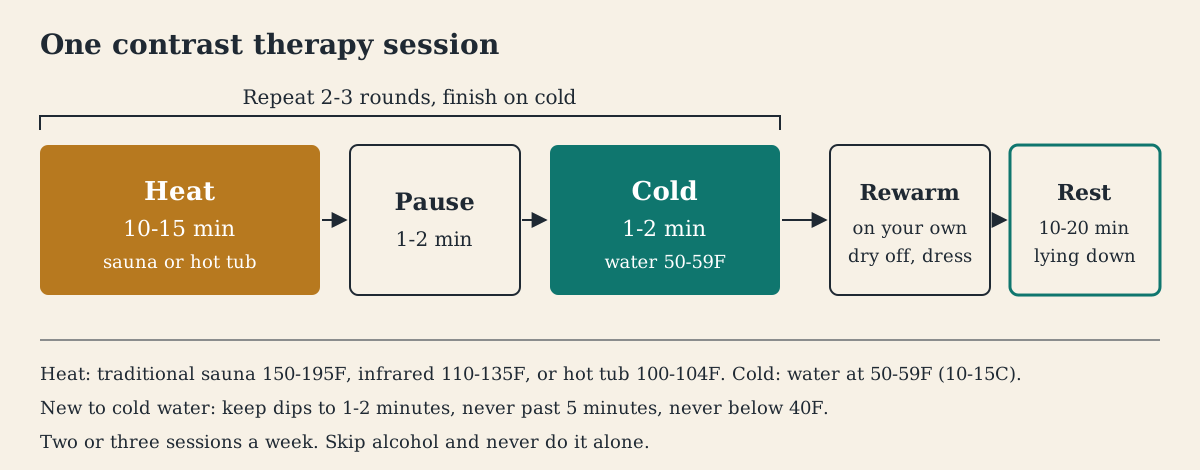
Typical temperatures:
- Traditional sauna: about 150-195F (66-91C)
- Infrared sauna: about 110-135F (43-57C)
- Hot tub: 100-104F
- Cold water: about 50-59F (10-15C)
In the sports trials, athletes typically spent about a minute in cold water at 8-15C and 1-3 minutes in hot water at about 35-45C, repeating the pair for 6-24 minutes in total and usually finishing cold. Susanna Søberg's Danish winter swimmers spent 10-15 minutes in the sauna and 1-2 minutes in cold water, two or three dips per visit.
How it differs from a cold plunge alone
Contrast therapy adds heat to the cold. Heat sends more blood to your skin and raises your pulse. Cold narrows the vessels there and pushes heart rate and blood pressure up.
Whether the pair beats either half is unknown, and a 2026 review noted that few studies compare them directly. For recovery, cold alone is ahead so far. A 2023 meta-analysis of 28 studies found cold-water immersion beat contrast water therapy for most outcomes. For cold on its own, see our cold plunge temperature guide.
How contrast therapy works (and the Søberg principle)
Blood flow to your limbs rises in warm water and falls in cold. Sports scientists call the switch a "pumping action" that may move fluid out of swollen muscle, but the exact mechanism hasn't been established.
The last round has its own rule. Andrew Huberman calls it the Søberg principle, and it says to end on cold. Susanna Søberg, who studied cold, heat and metabolism for her University of Copenhagen doctorate, explained it on his podcast: "when you end on the cold, you force your body to heat up by itself. And that will require that you keep your brown fat activated and also your muscles." No trial has compared ending on cold with ending on heat, so treat it as reasoning from physiology.
The afterdrop and the late shiver
Your core temperature keeps falling for a while after you leave cold water. This is the afterdrop. The clamped vessels in your skin reopen, and warm blood flows out, cools, and returns to your core. That's why shivering often starts after you get out.
Søberg sees the shiver as useful because it raises your metabolism: "shivering is just like when you go exercising in the training center." Her condition is that you don't get too cold. If you're shaking hard or feel confused, warm up straight away.
Contrast therapy benefits: what the research shows
| Benefit | Evidence comes from | Strength |
|---|---|---|
| Recovery after exercise | Contrast therapy trials | Consistent against resting, high risk of bias |
| Lower inflammation | Mostly cold after exercise | Small effects |
| Heart health | One Finnish sauna cohort | Observational, men only |
| Circulation | Blood flow during sessions | No long-term change shown |
| Nervous system | One small contrast study | Thin |
| Mood | One heat trial, one cold study | Thin |
| Metabolism | One small winter swimmer study | Thin |
1. Faster recovery after hard exercise
After hard exercise, alternating hot and cold beat resting for soreness and strength loss. A 2013 meta-analysis of 18 trials found this, though every trial had a high risk of bias. Pooled soreness data from 13 trials favoured it at every check from under 6 hours to 96 hours, and fewer trials showed the same for strength loss. It did no better than cold water, warm water, compression, active recovery or stretching.
A 2024 network meta-analysis of 57 studies ranked it first of four water and cold methods for lowering creatine kinase, a sign of muscle damage.
If you lift, mind the timing. In a 2015 study of 21 men doing 12 weeks of strength training, those who sat in cold water for 10 minutes after each session gained less strength and muscle than those who did active recovery. Ending a contrast session on cold may carry the same cost, so wait before plunging after a lifting session.
2. Lower inflammation after exercise
A 2018 meta-analysis of 99 recovery studies found massage and cold exposure lowered inflammation markers the most, with small drops in IL-6 and C-reactive protein. A 2025 review called contrast therapy promising for swelling after muscle-damaging exercise, but there are too few studies to be sure.
3. Heart health (mostly sauna data)
The famous numbers come from the Kuopio study, which followed 2,315 Finnish men aged 42-60 for about 20 years. Compared with once-a-week sauna users, men who went 4-7 times a week had a 63% lower risk of sudden cardiac death and a 40% lower risk of dying from any cause. Sessions over 19 minutes went with about half the risk of sudden cardiac death of sessions under 11 minutes.
It's observational, all men, and sauna only. For contrast therapy itself, the 2026 review found little evidence of any change in resting heart rate or blood pressure.
4. Circulation
Blood flow to your limbs rises in the heat and falls in the cold during a session. The 2026 review found little evidence of lasting effects on vascular health.
5. Nervous system: a strong stress, then recovery
Both halves push the sympathetic, fight-or-flight side of your nervous system. In a 2000 study, an hour in 14C water raised blood noradrenaline by 530%. A hot sauna activates the same system, and your pulse rises by 30% or more, according to Harvard Health.
The parasympathetic nervous system takes over afterwards. In one study of 11 runners after a high-intensity session, high-frequency heart rate variability, a marker of parasympathetic activity, was higher 14 hours after contrast water therapy than before it, and lower after passive rest. Nobody has shown that regular sessions make you better at handling everyday stress.
6. Mood
In the same 2000 study, young men sat in 14C water up to the neck for an hour, and the dopamine in their blood rose by 250%. Blood dopamine isn't brain dopamine, and a short cold shower hasn't been tested for dopamine at all. There's more on what that study does and doesn't show about dopamine.
In a 2016 trial, 29 medication-free adults with major depression had one session of whole-body hyperthermia (not a sauna). Compared with a sham session, their depression scores stayed lower for six weeks. It was one small trial of heat alone. Sports medicine physician Chelsea Evans told the American Medical Association: "While it may give you temporary euphoria, in terms of long-term benefit, I don't think we're there yet."
7. Brown fat and metabolism
Brown fat burns energy to make heat, and cold switches it on. Søberg's 2021 study compared 8 Danish winter swimmers, most of whom also used a sauna, with 8 men who did neither. When cooled, the swimmers burned more calories, though their brown fat activated about as much, and they had lower blood sugar two hours after a glucose drink. The design can't show cause, and the 2026 review found little evidence that contrast therapy changes glucose or fat metabolism.
The 11/57 numbers: where they come from
"11 minutes of cold and 57 minutes of sauna a week" often gets presented as a minimum threshold, including on Huberman's podcast. When Søberg added up her winter swimmers' habits, that's what they did: 11 minutes a week in cold water, 1-2 minutes per dip, and 57 minutes in the sauna, 10-15 minutes per session.
So 11/57 describes 8 healthy young men, and nobody tested 11 minutes against 5 or 20. It's still a reasonable target. It's modest and keeps the cold dips short.
How to do contrast therapy safely
A session built on the winter swimmers' pattern:
- Heat for 10-15 minutes in a sauna, or a hot tub at 100-104F. Get out sooner if you feel dizzy or sick.
- Pause for a minute or two, sitting or standing still.
- Cold water at about 50-59F for 1-2 minutes.
- Repeat for two or three rounds.
- Finish on cold. Dry off, dress, and let your body rewarm itself.
- Do this two or three times a week.
New to cold water? Cleveland Clinic advises beginners to keep cold sessions to a minute or two, never past five minutes, and never below 40F.
The pause between hot and cold
Going straight from a hot sauna into cold water stacks two swings. Harvard Health notes that blood pressure in a sauna is unpredictable, falling in some people and rising in others, and cold water pushes it up. A minute of stillness, or the rinse Cleveland Clinic suggests after a sauna, gives your body time to adjust. No study has tested the ideal gap.
Sauna safety: alcohol and bathing alone
Deaths in saunas are rare, at about 0.06 per 100,000 people a year in Sweden and under 2 per 100,000 in Finland. Half or more involved alcohol, and bathing alone was a common risk factor. Harvard Health adds two rules: avoid medications that impair sweating, and stay in no more than 15-20 minutes.
Who should avoid contrast therapy
Talk to your doctor first if you have:
- heart disease or a heart rhythm problem
- high blood pressure, especially if uncontrolled
- vascular disease or poor circulation
- diabetes or peripheral neuropathy
- multiple sclerosis
- a pregnancy
The AMA's cold concerns cover the first three items, and Cleveland Clinic's guidance adds the rest. After an ankle, foot or hand injury, wait about 48 hours before contrast baths and keep the warm water lukewarm.
Health note: contrast therapy strains your heart and blood vessels, so get medical advice first if any of the above applies to you.
Infrared or traditional sauna?
A 2018 review puts traditional Finnish saunas at 80-100C (176-212F) and infrared cabins at 45-60C (113-140F), a little above Cleveland Clinic's figures. Infrared lamps or panels mainly warm your body, not the air. "They'll both make you sweat, but infrared saunas tend to be gentler and more comfortable," says Melissa Young, a functional medicine specialist at Cleveland Clinic.
The 20-year heart data comes from traditional saunas; the longest infrared cohort in a 2018 review ran five years. If high heat makes you feel unwell, start with infrared.
Contrast therapy at home
- Shower. Several minutes hot, then up to a minute or two cold, two or three times, finishing cold. See cold shower vs cold plunge for how the two differ.
- Bath and tub. A hot bath, then a tub or stock tank of cold water at 50-59F.
- Limb baths. Two buckets for a sore ankle or hand. The usual injury protocol is cold for about 2 minutes, then lukewarm water around 104F (40C) for 30 seconds, alternating for up to 15 minutes and finishing cold.
Combining contrast therapy with nervous system regulation
Both heat and cold are stressors, and your body is still rewarming when you get out. Close to bedtime that can backfire. Søberg points out that the stress response from cold makes it hard for some people to fall asleep.
So plan the downshift. Once you're dry and warm, lie down for 10-20 minutes and let your breathing slow. Non-sleep deep rest is one way to do it. It's a guided session that moves your attention through your body while you stay awake. No study has tested NSDR after contrast therapy.
FAQ
Can contrast therapy help with chronic pain?
Contrast therapy for chronic pain has little direct research. A 2025 scoping review of seven trials in painful muscle and joint conditions found them too varied and too modest in quality for clear conclusions. For long-term pain, talk it through with your doctor or physiotherapist first.
Is contrast therapy safe for everyone?
Contrast therapy isn't safe for everyone. With heart disease, rhythm problems, high blood pressure, vascular disease or a pregnancy, talk to a doctor first. Everyone should skip alcohol, avoid going alone, and get out if they feel dizzy.
Is contrast therapy better than ice bath alone?
For recovery, an ice bath alone did better. A 2023 meta-analysis of 28 studies found cold-water immersion beat contrast water therapy for most recovery outcomes. Contrast therapy adds heat, which some people prefer.
How long do contrast therapy benefits last?
The recovery benefits of contrast therapy were tracked for up to 96 hours after exercise. The Finnish heart findings linked sauna habits, reported once at the start, to deaths over about 20 years. No study has shown lasting effects from one session.
Should I end contrast therapy on hot or cold?
End contrast therapy on cold if you want your own brown fat and muscles to do the rewarming, as Søberg describes. Nobody has compared the two endings. If you're shaking hard or feel unwell, warm up instead.
How often should you do contrast therapy?
Doing contrast therapy two or three times a week matches Søberg's winter swimmers. No study has shown that more often is better.
Sources
- Bieuzen F, Bleakley CM, Costello JT (2013). Contrast water therapy and exercise induced muscle damage: a systematic review and meta-analysis. PLoS One, 8(4):e62356. https://pubmed.ncbi.nlm.nih.gov/23626806/
- Moore E, Fuller JT, Bellenger CR, et al. (2023). Effects of cold-water immersion compared with other recovery modalities on athletic performance following acute strenuous exercise in physically active participants. Sports Medicine, 53(3):687-705. https://pubmed.ncbi.nlm.nih.gov/36527593/
- Chen R, Ma X, Ma X, Cui C (2024). The effects of hydrotherapy and cryotherapy on recovery from acute post-exercise induced muscle damage: a network meta-analysis. BMC Musculoskelet Disord, 25(1):749. https://pubmed.ncbi.nlm.nih.gov/39294614/
- Dupuy O, Douzi W, Theurot D, Bosquet L, Dugué B (2018). An evidence-based approach for choosing post-exercise recovery techniques. Frontiers in Physiology, 9:403. https://pubmed.ncbi.nlm.nih.gov/29755363/
- Rousse Y, Sautillet B, Costalat G, et al. (2025). Isolated and combined effects of cold, heat and hypoxia therapies on muscle recovery following exercise-induced muscle damage. Sports Medicine, 55(11):2721-2751. https://pubmed.ncbi.nlm.nih.gov/40983804/
- de Haan V, Plasqui G, Pallubinsky H (2026). Cardiometabolic effects of contrast therapy: a systematic review. Experimental Physiology. https://pubmed.ncbi.nlm.nih.gov/42667694/
- Douzi W, Hohenauer E, Dupuy O, Dugué B (2026). Heat and cold interventions: unveiling synergistic and counteractive mechanisms for health benefits. Int J Biometeorol, 70(4):106. https://pubmed.ncbi.nlm.nih.gov/41893929/
- Sautillet B, Leprêtre PM, Schmitt L, et al. (2021). Post-exercise heart rate variability: whole-body cryotherapy vs. contrast water therapy. Int J Sports Med, 42(11):979-984. https://pubmed.ncbi.nlm.nih.gov/33735918/
- Laukkanen T, Khan H, Zaccardi F, Laukkanen JA (2015). Association between sauna bathing and fatal cardiovascular and all-cause mortality events. JAMA Internal Medicine, 175(4):542-548. https://pubmed.ncbi.nlm.nih.gov/25705824/
- Hussain J, Cohen M (2018). Clinical effects of regular dry sauna bathing: a systematic review. Evid Based Complement Alternat Med, 2018:1857413. https://pubmed.ncbi.nlm.nih.gov/29849692/
- Kenttämies A, Karkola K (2008). Death in sauna. J Forensic Sci, 53(3):724-729. https://pubmed.ncbi.nlm.nih.gov/18471223/
- Leonardi G, et al. (2025). Mechanisms and efficacy of contrast therapy for musculoskeletal painful disease: a scoping review. J Clin Med, 14(5):1441. https://pubmed.ncbi.nlm.nih.gov/40094855/
- Janssen CW, Lowry CA, Mehl MR, et al. (2016). Whole-body hyperthermia for the treatment of major depressive disorder: a randomized clinical trial. JAMA Psychiatry, 73(8):789-795. https://pubmed.ncbi.nlm.nih.gov/27172277/
- Søberg S, Löfgren J, Philipsen FE, et al. (2021). Altered brown fat thermoregulation and enhanced cold-induced thermogenesis in young, healthy, winter-swimming men. Cell Reports Medicine, 2(10):100408. https://pubmed.ncbi.nlm.nih.gov/34755128/
- Šrámek P, Šimečková M, Janský L, et al. (2000). Human physiological responses to immersion into water of different temperatures. Eur J Appl Physiol, 81(5):436-442. https://pubmed.ncbi.nlm.nih.gov/10751106/
- Roberts LA, Raastad T, Markworth JF, et al. (2015). Post-exercise cold water immersion attenuates acute anabolic signalling and long-term adaptations in muscle to strength training. J Physiol, 593(18):4285-4301. https://pubmed.ncbi.nlm.nih.gov/26174323/
- Huberman Lab (2023). Dr. Susanna Søberg: How to Use Cold & Heat Exposure to Improve Your Health. https://www.hubermanlab.com/episode/dr-susanna-soberg-how-to-use-cold-and-heat-exposure-to-improve-your-health
- American Medical Association. 4 things to know about cold plunges and contrast therapy. https://www.ama-assn.org/public-health/prevention-wellness/4-things-know-about-cold-plunges-and-contrast-therapy
- Harvard Health Publishing (2020). Sauna health benefits: are saunas healthy or harmful? https://www.health.harvard.edu/staying-healthy/saunas-and-your-health
- Cleveland Clinic (2026). 6 possible benefits of infrared saunas. https://health.clevelandclinic.org/infrared-sauna-benefits
- Cleveland Clinic (2026). Are 'cold plunge' ice baths good for you? https://health.clevelandclinic.org/what-to-know-about-cold-plunges
- ColumbiaDoctors. Contrast baths. https://www.columbiadoctors.org/health-library/definition/contrast-baths/