The natural anxiety remedies with the best evidence are slow breathing, regular exercise, less caffeine and alcohol, steadier sleep, and a few supplements with small trials behind them. They run on different clocks. You can use a breathing pattern in the middle of a spike, while most of the supplement trials ran for four to twelve weeks. Here are seven, ranked by how soon you can use them, with what each study did and didn't show.
A health note. About one in five US adults had an anxiety disorder in the past year, according to NIMH survey data from the early 2000s. See a GP if anxiety is affecting your daily life, you're struggling to cope with anxiety, fear or panic, or the things you're trying, or your treatment, aren't helping. If you have thoughts of harming yourself, get help now by calling your local emergency number, or Samaritans on 116 123 in the UK. Check any supplement with a pharmacist or doctor before you start it, especially if you take other medicines or are pregnant.
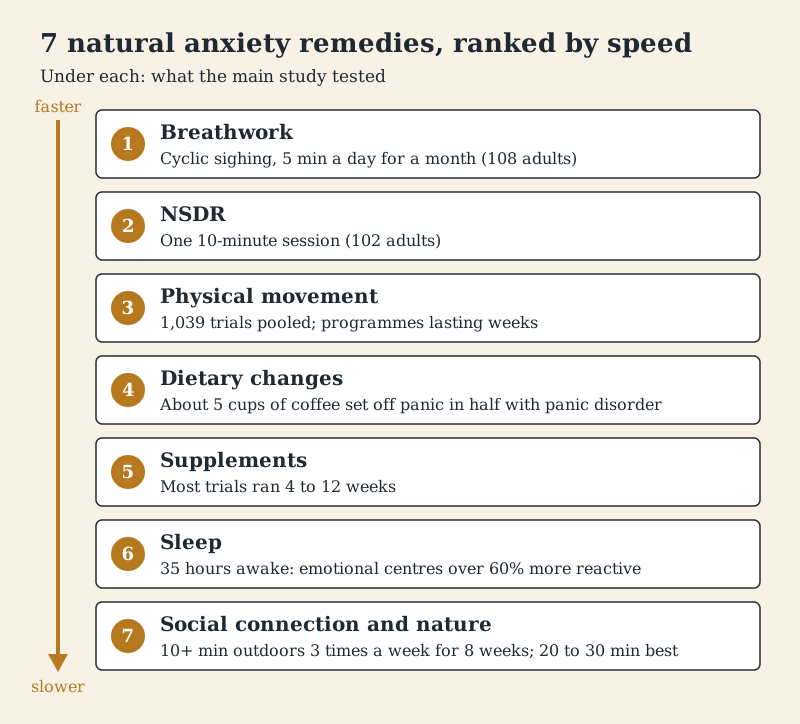
7 natural anxiety remedies ranked by speed
- Breathwork. Use it now, mid-spike. An exhale-heavy pattern did best in a Stanford trial of 5 minutes' daily breathing.
- NSDR (non-sleep deep rest). One 10 to 20 minute session lying down. Small trials, modest effects.
- Physical movement. Works best as a habit, and has the biggest evidence base on this list.
- Dietary changes. Cutting back on caffeine and alcohol is a quick test to run on yourself.
- Supplements. Most trials ran for 4 to 12 weeks. Small studies, some run with the makers.
- Sleep. A daily habit, and a short night leaves the brain's emotional centres more reactive.
- Social connection and nature. Ongoing, and easy to stack with movement.
What causes anxiety (and why natural remedies can help)
What anxiety does in your body
Tight muscles, an upset stomach, sweating, trouble breathing and broken sleep are all listed symptoms of generalised anxiety disorder. They're the stress response running when there's no danger to deal with. That's why tools that slow the body down can take the edge off.
Medical causes to rule out first
Some conditions produce symptoms that feel like anxiety:
- An overactive thyroid can cause anxiety, nervousness, a pounding heart and poor sleep.
- Low blood sugar causes shaking, sweating and nervousness, and comes on quickly.
- Iron deficiency anaemia causes palpitations and tiredness, and a large Taiwanese database study linked it to a higher risk of anxiety disorders.
If your anxiety came on suddenly or feels physical in a new way, ask your GP for blood tests before trying anything below. Don't start iron tablets on a guess.
Where natural remedies fit
Talking therapy (usually cognitive behavioural therapy, CBT) and medication are the main treatments a GP will offer for an anxiety disorder. The remedies here can sit alongside them. A notable non-drug result came from a 2023 trial of 276 adults with anxiety disorders, where an 8-week mindfulness-based stress reduction (MBSR) course worked about as well as the antidepressant escitalopram (Lexapro).
Method 1: breathwork
Breathing comes first because you can do it anywhere. Across 20 randomised trials, breathwork lowered self-reported anxiety compared with control conditions. The effect was small, and the reviewers warned against hype.
The physiological sigh (cyclic sighing)
- Breathe in through your nose.
- At the top, take a second, shorter sip of air through the nose.
- Breathe out slowly and fully through your mouth.
- Repeat. One or two sighs is the quick version; the trial used 5 minutes.
In a Stanford trial of 108 adults, 5 minutes a day of cyclic sighing for a month lifted mood more than the same time spent on mindfulness meditation, and it slowed people's resting breathing rate. People with panic disorder weren't tested. There's more on how the physiological sigh works.
The 4-7-8 method
Breathe in through your nose for 4 counts, hold for 7, and breathe out through your mouth for 8. Do 3 or 4 rounds. In a 2026 crossover study of 34 people, ten minutes of 4-7-8 breathing lowered stress and negative mood in the women, with no measurable change in heart rate variability.
Box breathing
In for 4, hold for 4, out for 4, hold for 4, for 4 to 8 rounds. Box breathing was one of the arms in the same Stanford trial. Cyclic sighing did a little better on mood, so start there if you only learn one.
If any of these makes you dizzy or sets off panic, stop and breathe normally.
Method 2: NSDR (non-sleep deep rest)
What NSDR is
NSDR is a guided practice where you lie still, stay awake and follow a voice that slows your breathing and moves your attention around your body. Most sessions run 10 to 30 minutes. It overlaps with meditation, but you don't have to watch your thoughts. You follow the cues.
What the trials show for anxiety
Four trials use the NSDR name. In a pilot of 45 heart patients in cardiac rehab, eight NSDR sessions cut anxiety scores by 28%, against about 1% with virtual-reality therapy, though in a trial this small the gap wasn't statistically significant. In 102 active young adults, one 10-minute session lowered self-rated stress slightly more than a control session. A third trial in 60 adults found a 10-minute session did nothing measurable, while a 25-minute nap improved readiness. No one has tested NSDR in people diagnosed with an anxiety disorder.
Try it after a spike has passed, when you can lie down for ten minutes. NSDR.co tracks are free. The full guide to NSDR for anxiety covers how to use it.
Method 3: physical movement
What the evidence says
Exercise has the deepest evidence base of any of these natural anxiety remedies. A 2023 umbrella review pooled 97 reviews covering 1,039 trials and about 128,000 people, and found a medium-sized drop in anxiety symptoms with physical activity. Most of those reviews were rated low quality, but the benefit held across a wide range of adult groups.
A Swedish registry study followed nearly 400,000 people for up to 21 years. Those who had skied the Vasaloppet race (up to 90 km) were about 60% less likely to be diagnosed with anxiety than matched non-skiers. It's observational, so the skiers may differ in other ways too.
How much and how hard
Any movement you'll keep doing counts. If you can push a little harder, do, because higher-intensity activity was linked with bigger improvements. The evidence comes from programmes lasting weeks, so treat exercise as a habit.
Method 4: dietary changes
Caffeine
In lab studies, a dose of about five cups of coffee triggered a panic attack in about half of people with panic disorder, and in under 2% of healthy volunteers. Smaller doses haven't been tested that way. The FDA cites 400 mg a day as an amount not generally linked to negative effects in most adults, and lists anxiety and jitters as signs of too much.
The NHS advises against lots of coffee, tea, cola or energy drinks if you have anxiety. Cut back for a couple of weeks and see how you feel, and check how long caffeine stays in your system.
Alcohol
A review of 63 studies found that cutting down on alcohol improved anxiety and depression symptoms in heavier drinkers. The NHS also lists alcohol among the things not to use to relieve anxiety.
Blood sugar
Low blood sugar on its own causes shakiness, sweating and nervousness. Regular meals take one source of anxiety-like symptoms off the table.
What about the gut?
Much of the body's serotonin is made in the gut, where it works on digestion and blood platelets. Prebiotic and probiotic trials (34 pooled in 2019) found only a tiny effect on anxiety for probiotics, and none for prebiotics.
Oily fish has a better case. A 2018 meta-analysis of 19 trials found omega-3s lowered anxiety a little, but only in trials using at least 2,000 mg a day, and the authors called for better studies. For magnesium, the food sources are nuts, seeds, whole grains, beans and green vegetables.
Method 5: supplements (and what the trials used)
Ask a pharmacist before you take any of these, and try one at a time so you know what did what. Supplements aren't approved by the FDA before they go on sale, the anxiety trials are small, and the US National Center for Complementary and Integrative Health has a page titled "Natural Doesn't Necessarily Mean Safer, or Better".
Magnesium
A 2017 systematic review found 18 studies, all in people already prone to anxiety (mild anxiety, PMS, after birth, high blood pressure). Half reported less anxiety with magnesium, and the reviewers rated the evidence poor. The often-quoted "as good as an antidepressant" result came from 23 older adults with diabetes, low blood magnesium and depression, comparing 450 mg with imipramine. It says nothing about anxiety.
Over half of US adults eat less magnesium than the estimated average requirement, though low intake doesn't prove a deficiency. If you supplement, stay at or under 350 mg a day from supplements, the US adult upper limit, which was set because of diarrhoea. Tell your doctor first if you have kidney or heart disease. For forms, see magnesium glycinate vs citrate.
L-theanine
L-theanine is an amino acid found in tea. In a 4-week crossover trial of 30 healthy adults, trait-anxiety, depression and sleep-quality scores fell while people took 200 mg a day, but only some sleep measures were clearly better than on placebo. Two of the authors worked for the company that makes the theanine and supplied the tablets.
Passionflower and chamomile
In a pilot trial of 36 people with generalised anxiety disorder, passionflower extract did as well as the benzodiazepine oxazepam over 4 weeks, though oxazepam worked faster and there was no placebo group. In a US trial, 93 people whose moderate-to-severe generalised anxiety improved on 1,500 mg of chamomile extract a day were split between staying on it and placebo. Those on chamomile kept lower symptoms, but relapse wasn't significantly lower.
Lavender oil capsules (Silexan)
Silexan is an oral lavender-oil capsule, a different product from a diffuser. It matched lorazepam over 6 weeks in one trial, and in a 10-week trial of 539 adults with generalised anxiety disorder, 80 or 160 mg a day beat placebo. The larger trial was co-written by staff of the maker, Schwabe.
Ashwagandha and kava
Ashwagandha has been linked to rare cases of liver injury. Avoid it if you have a thyroid or autoimmune condition or are pregnant, and the evidence on anxiety is unclear. Skip kava, which has been linked to rare liver injury, some of it serious or fatal.
Method 6: sleep
The sleep-anxiety loop
Poor sleep and anxiety feed each other. Trouble falling or staying asleep is a listed symptom of generalised anxiety disorder. In the other direction, in a 2007 brain-scan study of 26 people, staying awake for 35 hours left the brain's emotional centres over 60% more reactive to upsetting images.
Sleep habits with evidence behind them
- Get up at the same time every day. Irregular schedules are linked to a later body clock.
- Keep the bedroom at about 65 to 68°F (18 to 20°C).
- Swap the phone or e-reader for paper before bed. Reading on a light-emitting e-reader in the evening delayed sleep and cut melatonin in a 2015 study.
If worry is what keeps you up, there's a separate guide to stopping anxiety at bedtime.
Method 7: social connection and nature
Time outdoors
In an 8-week study, 36 city dwellers spent at least 10 minutes in a green spot three times a week. Each visit cut saliva cortisol beyond its normal daily fall, and 20 to 30 minutes gave the most per minute spent. It measured a stress hormone, not anxiety, but the cost is low.
People
In a brain-scan study, 16 married women facing a threatened electric shock showed a damped threat response while holding their husband's hand, and a smaller drop with a stranger's hand. Self-touch can stand in when you're alone. In a 2021 trial of 159 young adults put through a stress test, those assigned soothing self-touch (or a hug) had lower cortisol afterwards, though they didn't report feeling less stressed.
A walk in a park with a friend gets you movement, green space and company in one go.
Which method should you choose?
For a spike right now
Do two or three physiological sighs, or a few rounds of 4-7-8. If you can lie down for ten minutes, follow with an NSDR session.
For the next few weeks
- Breathe for 5 minutes a day, which is what the Stanford trial tested.
- Move most days, and push the pace when you can.
- Cut caffeine and alcohol for two weeks and notice the difference.
- Fix your wake time.
- Get outside, ideally with someone.
If you want to try a supplement
Talk to a pharmacist, pick one, and give it as long as most of the trials did (4 to 12 weeks). Keep magnesium supplements at or under 350 mg a day. If you take medication for anxiety, don't stop or swap it without your doctor.
FAQ
What is the fastest natural remedy for anxiety?
Slow breathing is the fastest natural remedy because you can start it the moment anxiety hits. The best-tested pattern is the physiological sigh (cyclic sighing), two inhales through the nose and one long exhale through the mouth. A 10-minute NSDR session is the next step up if you can lie down.
How long do natural anxiety remedies take to work?
Natural anxiety remedies work on different timescales. Breathing can take the edge off within a session, and NSDR was tested as a single 10-minute session. Exercise was studied as programmes lasting weeks, and most of the supplement trials ran from 4 to 12 weeks.
Can anxiety be cured naturally without medication?
Some people manage anxiety without medication, and an 8-week MBSR course matched escitalopram in a 2023 trial of 276 adults with anxiety disorders. "Cured" is too strong a word, though, and CBT is the usual first treatment. Make a plan with your GP, and don't stop prescribed medication on your own.
Does magnesium really help with anxiety?
Magnesium might help a little, mostly in people prone to anxiety. A 2017 review found benefit in half of 18 studies and rated the evidence poor. If you try it, stay at or under 350 mg a day from supplements.
What foods should I avoid if I have anxiety?
The foods and drinks to avoid are mainly caffeine and alcohol. High doses of caffeine trigger panic in many people with panic disorder, and cutting down on alcohol improved anxiety in a 63-study review. Eat regular meals so low blood sugar doesn't add shakiness of its own.
When should I see a doctor about anxiety?
See a doctor if anxiety affects your daily life, you're struggling to cope with anxiety, fear or panic, or the things you're trying yourself aren't helping. A GP can check for thyroid, blood sugar and iron problems and talk through CBT and medication. If you have thoughts of harming yourself, get urgent help.
Sources
- National Institute of Mental Health. Any Anxiety Disorder (statistics). https://www.nimh.nih.gov/health/statistics/any-anxiety-disorder
- NHS. Generalised anxiety disorder in adults: overview. https://www.nhs.uk/mental-health/conditions/generalised-anxiety-disorder/overview/
- NHS. Anxiety, fear and panic. https://www.nhs.uk/mental-health/feelings-symptoms-behaviours/feelings-and-symptoms/anxiety-fear-panic/
- MedlinePlus. Generalized anxiety disorder. https://medlineplus.gov/ency/article/000917.htm
- MedlinePlus. Hyperthyroidism. https://medlineplus.gov/ency/article/000356.htm
- MedlinePlus. Hypoglycemia. https://medlineplus.gov/hypoglycemia.html
- NHS. Iron deficiency anaemia. https://www.nhs.uk/conditions/iron-deficiency-anaemia/
- Lee HS et al. (2020). Psychiatric disorders risk in patients with iron deficiency anemia and association with iron supplementation medications: a nationwide database analysis. BMC Psychiatry. https://pubmed.ncbi.nlm.nih.gov/32393355/
- Hoge EA et al. (2023). Mindfulness-Based Stress Reduction vs Escitalopram for the Treatment of Adults With Anxiety Disorders: A Randomized Clinical Trial. JAMA Psychiatry. https://pubmed.ncbi.nlm.nih.gov/36350591/
- Fincham GW et al. (2023). Effect of breathwork on stress and mental health: A meta-analysis of randomised-controlled trials. Scientific Reports. https://pubmed.ncbi.nlm.nih.gov/36624160/
- Balban MY et al. (2023). Brief structured respiration practices enhance mood and reduce physiological arousal. Cell Reports Medicine. https://pubmed.ncbi.nlm.nih.gov/36630953/
- Avcık FE, Koç F, Aktop A (2026). Acute Psychophysiological Effects Of 4-7-8 And Nadi Shodhana Breathing: A Randomized Crossover Study. Applied Psychophysiology and Biofeedback. https://pubmed.ncbi.nlm.nih.gov/42771122/
- Wrzeciono A et al. (2024). Non-Sleep Deep Rest Relaxation and Virtual Reality Therapy for Psychological Outcomes in Patients with Coronary Artery Disease: A Pilot Randomized Controlled Trial. Journal of Clinical Medicine. https://pubmed.ncbi.nlm.nih.gov/39685636/
- Boukhris O et al. (2026). Time course of perceptual, cognitive, physical and physiological responses to a single non-sleep deep rest session in physically active young adults. Applied Psychology: Health and Well-Being. https://pubmed.ncbi.nlm.nih.gov/42383502/
- Boukhris O, Suppiah H, Driller M (2026). Comparing the Effects of a Short Nap and Non-Sleep Deep Rest on Perceptual, Cognitive, and Physical Performance in Active Adults. Clocks & Sleep. https://pubmed.ncbi.nlm.nih.gov/42783005/
- Singh B et al. (2023). Effectiveness of physical activity interventions for improving depression, anxiety and distress: an overview of systematic reviews. British Journal of Sports Medicine. https://pubmed.ncbi.nlm.nih.gov/36796860/
- Svensson M et al. (2021). Physical Activity Is Associated With Lower Long-Term Incidence of Anxiety in a Population-Based, Large-Scale Study. Frontiers in Psychiatry. https://pubmed.ncbi.nlm.nih.gov/34566716/
- Klevebrant L, Frick A (2022). Effects of caffeine on anxiety and panic attacks in patients with panic disorder: A systematic review and meta-analysis. General Hospital Psychiatry. https://pubmed.ncbi.nlm.nih.gov/34871964/
- US Food and Drug Administration. Spilling the Beans: How Much Caffeine is Too Much? https://www.fda.gov/consumers/consumer-updates/spilling-beans-how-much-caffeine-too-much
- Charlet K, Heinz A (2017). Harm reduction: a systematic review on effects of alcohol reduction on physical and mental symptoms. Addiction Biology. https://pubmed.ncbi.nlm.nih.gov/27353220/
- Yano JM et al. (2015). Indigenous bacteria from the gut microbiota regulate host serotonin biosynthesis. Cell. https://pubmed.ncbi.nlm.nih.gov/25860609/
- Liu RT, Walsh RFL, Sheehan AE (2019). Prebiotics and probiotics for depression and anxiety: A systematic review and meta-analysis of controlled clinical trials. Neuroscience and Biobehavioral Reviews. https://pubmed.ncbi.nlm.nih.gov/31004628/
- Su KP et al. (2018). Association of Use of Omega-3 Polyunsaturated Fatty Acids With Changes in Severity of Anxiety Symptoms: A Systematic Review and Meta-analysis. JAMA Network Open. https://pubmed.ncbi.nlm.nih.gov/30646157/
- NCCIH. Natural Doesn't Necessarily Mean Safer, or Better. https://www.nccih.nih.gov/health/know-science/natural-doesnt-mean-better
- Boyle NB, Lawton C, Dye L (2017). The Effects of Magnesium Supplementation on Subjective Anxiety and Stress: A Systematic Review. Nutrients. https://pubmed.ncbi.nlm.nih.gov/28445426/
- Barragán-Rodríguez L et al. (2008). Efficacy and safety of oral magnesium supplementation in the treatment of depression in the elderly with type 2 diabetes: a randomized, equivalent trial. Magnesium Research. https://pubmed.ncbi.nlm.nih.gov/19271419/
- MedlinePlus. Magnesium Oxide. https://medlineplus.gov/druginfo/meds/a601074.html
- Costello RB et al. (2023). Perspective: Call for Re-evaluation of the Tolerable Upper Intake Level for Magnesium Supplementation in Adults. Advances in Nutrition. https://pubmed.ncbi.nlm.nih.gov/37487817/
- Hidese S et al. (2019). Effects of L-Theanine Administration on Stress-Related Symptoms and Cognitive Functions in Healthy Adults: A Randomized Controlled Trial. Nutrients. https://pubmed.ncbi.nlm.nih.gov/31623400/
- Akhondzadeh S et al. (2001). Passionflower in the treatment of generalized anxiety: a pilot double-blind randomized controlled trial with oxazepam. Journal of Clinical Pharmacy and Therapeutics. https://pubmed.ncbi.nlm.nih.gov/11679026/
- Mao JJ et al. (2016). Long-term chamomile (Matricaria chamomilla L.) treatment for generalized anxiety disorder: A randomized clinical trial. Phytomedicine. https://pubmed.ncbi.nlm.nih.gov/27912875/
- Woelk H, Schläfke S (2010). A multi-center, double-blind, randomised study of the Lavender oil preparation Silexan in comparison to Lorazepam for generalized anxiety disorder. Phytomedicine. https://pubmed.ncbi.nlm.nih.gov/19962288/
- Kasper S et al. (2014). Lavender oil preparation Silexan is effective in generalized anxiety disorder: a randomized, double-blind comparison to placebo and paroxetine. International Journal of Neuropsychopharmacology. https://pubmed.ncbi.nlm.nih.gov/24456909/
- NCCIH. Ashwagandha. https://www.nccih.nih.gov/health/ashwagandha
- NCCIH. Kava. https://www.nccih.nih.gov/health/kava
- Yoo SS et al. (2007). The human emotional brain without sleep: a prefrontal amygdala disconnect. Current Biology. https://pubmed.ncbi.nlm.nih.gov/17956744/
- Phillips AJK et al. (2017). Irregular sleep/wake patterns are associated with poorer academic performance and delayed circadian and sleep/wake timing. Scientific Reports. https://pubmed.ncbi.nlm.nih.gov/28607474/
- Sleep Foundation. Best Temperature for Sleep. https://www.sleepfoundation.org/bedroom-environment/best-temperature-for-sleep
- Chang AM et al. (2015). Evening use of light-emitting eReaders negatively affects sleep, circadian timing, and next-morning alertness. PNAS. https://pubmed.ncbi.nlm.nih.gov/25535358/
- Hunter MR, Gillespie BW, Chen SY (2019). Urban Nature Experiences Reduce Stress in the Context of Daily Life Based on Salivary Biomarkers. Frontiers in Psychology. https://pubmed.ncbi.nlm.nih.gov/31019479/
- Coan JA, Schaefer HS, Davidson RJ (2006). Lending a hand: social regulation of the neural response to threat. Psychological Science. https://pubmed.ncbi.nlm.nih.gov/17201784/
- Dreisoerner A et al. (2021). Self-soothing touch and being hugged reduce cortisol responses to stress: A randomized controlled trial on stress, physical touch, and social identity. Comprehensive Psychoneuroendocrinology. https://pubmed.ncbi.nlm.nih.gov/35757667/