The simplest answer to how to lower cortisol is to work with its daily rhythm. Cortisol should be high soon after you wake and low by evening, so the useful moves are timed: bright light early, hard exercise earlier in the day, easy movement and time outdoors when stress builds, and protected sleep at night. Each step below comes with the study behind it, how big the effect was, and where the evidence runs out.
TL;DR
- Cortisol isn't the enemy. You need a high morning and a low evening, and most of what helps is about timing.
- Get bright light soon after waking. In a lab study, early-morning bright light raised cortisol by more than 50%, while the same light in the afternoon did nothing.
- Cold water doesn't seem to raise cortisol. In one study, an hour in 14°C water left it flat or slightly lower.
- Easy exercise is the cortisol-friendly kind. Thirty minutes at 40% effort didn't raise it, while 80% effort raised it by about 83%.
- Twenty to 30 minutes somewhere green lowered cortisol beyond its normal daily fall in a study of 36 city dwellers.
- Protect your sleep. One short night raised the next evening's cortisol by 37%.
- Ashwagandha has the best supplement data: an 8-week trial and a 2024 meta-analysis of 9 trials found lower cortisol than placebo. No trial has compared morning with evening doses.
What cortisol does (and why timing matters)
What is cortisol?
Cortisol is a steroid hormone made by your adrenal glands, which sit on top of your kidneys. Your hypothalamus and pituitary gland control how much they release. It helps regulate how your body uses glucose for energy, keeps blood pressure up, damps inflammation and helps run your sleep-wake cycle.
Calling it "the stress hormone" undersells it. Dr. Yufang Lin, an integrative medicine specialist at Cleveland Clinic, puts it this way: "Cortisol supports overall health. It helps us wake up in the morning, gives us energy during the day and lowers at night to help us sleep and rest."
So the goal is a healthy shape across the day: high in the morning, low at night.
The daily curve
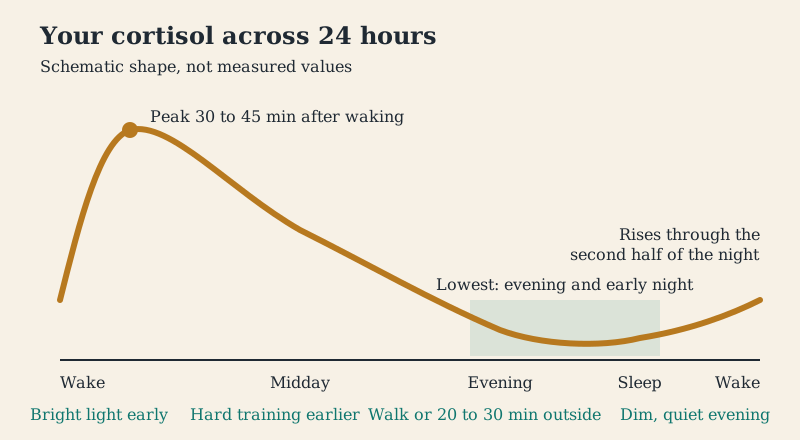
Cortisol follows a 24-hour rhythm. It typically peaks 30 to 45 minutes after you wake, a rise researchers call the cortisol awakening response. From there it falls through the day. It reaches its lowest point in the evening and the first part of the night, then climbs again through the second half of the night toward the next morning's peak.
That last part matters, because a lot of advice gets it backwards. Cortisol is rising during the final hours of sleep.
Short spikes vs months of high cortisol
A spike during a hard meeting or a sprint is normal and short-lived.
Months of very high cortisol are a different matter, and the clearest data come from disease. In Cushing's syndrome, where the body makes far too much cortisol, a small MRI study of 12 patients found smaller hippocampal volume in those with higher cortisol. Everyday stress is a much smaller signal than Cushing's, and the link there is less clear.
Sleep loss is one of the easiest ways to push cortisol up. After a night of only four hours' sleep, young men's evening cortisol was 37% higher the next day, and the evening quiet period started at least an hour late.
The morning control window
The first hour after waking is when you decide on light and caffeine, and both touch cortisol directly.
Get bright light early
In a lab study at the University of Chicago, eight men were kept awake overnight in dim light. Three hours of bright light starting at 5 a.m. raised their cortisol by more than 50% straight away. The same light given in the afternoon had no effect on cortisol at all.
That's a small lab study in sleep-deprived men, using bright artificial light, so treat it as a mechanism. The practical version comes from Stanford neuroscientist Andrew Huberman, who advises getting bright light, ideally sunlight, within 30 to 60 minutes of waking. The morning light protocol covers durations and what to do in winter.
Push caffeine back a little
Caffeine raises cortisol. In a trial of 96 adults, people who had gone five days without caffeine got a large cortisol rise from a dose. People who'd been taking 300 or 600 mg a day showed no rise from a 9 a.m. dose, though a second dose at 1 p.m. still pushed cortisol up. The authors concluded that in daily users the response is "reduced, but not eliminated".
Huberman recommends waiting 90 to 120 minutes after waking before your first coffee. That's his advice, and no trial has tested it against coffee on waking. A shorter delay is a fair compromise. The afternoon cup matters more. It still raised cortisol in regular drinkers, and caffeine stays in your system for hours.
Cold water doesn't raise cortisol
Cold water is often sold as a morning cortisol boost. The best-known study says otherwise. Young men sat in 14°C water up to the neck for an hour. Blood noradrenaline rose 530% and blood dopamine 250%, but cortisol didn't rise and tended to fall. Showers haven't been tested, and they're far milder than an hour at 14°C.
Use cold water for alertness if you like it, but not as a cortisol tool.
Daytime methods that lower cortisol
A stressful day gives you four levers: how you move, where you spend 20 minutes, what you eat, and how you recover after a spike.
Walking beats intense exercise for cortisol
Intensity is the switch. In a study of 12 trained men, 30 minutes at 40% of maximum effort didn't raise cortisol, and after corrections it slightly lowered it. At 60% it rose by about 40%. At 80% it rose by about 83%.
Hard training isn't bad for you, and a short-lived rise after a workout is normal. But if your days already feel overloaded, a walk or easy zone 2 cardio is the cortisol-friendly choice. Put hard sessions earlier in the day when you can, and keep them out of the last few hours before bed.
Get 20 to 30 minutes outside
In a University of Michigan study, 36 city dwellers spent time somewhere that felt like nature at least three times a week for eight weeks. Each outing lowered cortisol by 21.3% an hour beyond its normal daily fall. The best return per minute came at 20 to 30 minutes, and walking versus sitting made no difference.
Eat for steady stress responses
The diet evidence is thinner than most lists suggest. In an 8-week trial in overweight and obese women, a healthy diet as a whole didn't change cortisol compared with a typical American diet. Within the healthy-diet group, the women who added the most carbohydrate had a smaller cortisol response to a stress test.
A second small trial points the same way. Twenty-one young adults who had just lost weight ate three diets for four weeks each, and 24-hour urine cortisol was highest on the very-low-carb diet. If you're on a strict low-carb plan and feel more wired, that's worth knowing.
The omega-3 evidence is an association. Among 2,724 Dutch adults, people with lower blood omega-3 levels had slightly higher evening cortisol and more inflammation. Eating oily fish is reasonable. Expecting fish oil to lower your cortisol goes past the evidence.
Potassium is often quoted at 4,700 mg a day for cortisol. That's an old figure. The current adequate intake is 3,400 mg a day for men and 2,600 mg for women, and there's no good evidence that potassium intake drives cortisol.
Midday resets when stress spikes
After an argument or a bad meeting, the question is how fast you come back down. In a lab study of 88 couples, partners who rated themselves more mindful during a conflict discussion recovered their cortisol faster when the other person behaved badly.
Yoga has trial data too. A meta-analysis of 42 randomised trials linked yoga-based programmes to lower waking and evening cortisol compared with active control groups, though the programmes varied a lot. When you can't lie down or get to a mat, short breathing exercises for stress take a few minutes at a desk.
Evening wind-down protocol
If you want to know how to lower cortisol at night, the answer is mostly to let the natural drop happen.
Protect the low point
Cortisol should be heading toward its lowest point in the evening. Hard exercise raises cortisol, so a late session pushes it up just when it should be falling. Move intense training earlier when your schedule allows, and keep the last hours before bed quiet and dimly lit.
NSDR or yoga nidra before bed
Non-sleep deep rest is a guided practice where you lie still, stay awake and let your body go slack. No trial has measured what NSDR does to cortisol. The closest evidence comes from yoga nidra, which uses a similar body-scan format.
In a 2025 online trial, people did either an 11-minute or a 30-minute yoga nidra recording, ideally every day for two months, and were compared with a music group and a waitlist. Regular practice went with lower total cortisol and a steeper daily slope, meaning a bigger drop from morning to evening. The effects were small. The yoga nidra research has more trials, most of them small.
Ten to twenty minutes lying down with a guided track is a reasonable last step before bed. It may help you settle, but no one has shown a cortisol drop from a single session.
Sleep long enough for the late-night rise
Cortisol is lowest early in the night and rises through the second half toward your wake time. Cutting the night short shifts the rhythm the next day. After four hours' sleep, evening cortisol ran 37% higher, and the evening quiet period started at least an hour late.
So keep your wake time steady and give yourself enough hours.
Ashwagandha: what the cortisol trials show
Ashwagandha is the supplement with the most cortisol data. In an 8-week trial, 60 stressed adults took 125 mg or 300 mg of root extract twice a day (250 or 600 mg a day) or a placebo. Blood cortisol fell in both ashwagandha groups. A 60-day trial of 300 mg twice a day also lowered blood cortisol, and another gave 240 mg once a day for 60 days and saw a bigger drop in morning cortisol than placebo.
Pooled results are more modest. A 2025 meta-analysis of seven trials found an average drop of 1.16 µg/dL against placebo, with no clear change in how stressed people felt. A 2022 meta-analysis of 12 trials and 1,002 people found less stress and anxiety than placebo, with the best stress results at 300 to 600 mg a day, but rated the certainty of that evidence low. As Dr. Lin puts it, "No one food, pill or activity can deliver you to a lasting blissful calm."
Morning or evening?
You'll often read that ashwagandha must only be taken at night or it will blunt your morning peak. The three trials above gave it twice a day or once a day. None compared morning with evening dosing, so the night-only rule is a guess. Pick the time you'll remember.
Who should be careful
Liver injury is rare but documented. In a case series of five people, jaundice appeared 2 to 12 weeks after starting ashwagandha, and liver tests mostly returned to normal within one to five months.
Health note: talk to a doctor before taking ashwagandha if you are pregnant, have a liver condition or take regular medication.
Where to start
If you need something today
Take a 20-minute walk outside this afternoon, keep your coffee to the morning, and lie down with a guided session before bed. Those three cost nothing and fit around a working day.
If you're building habits
Start with morning light and a steady wake time, which need no extra time. Add an easy daily walk the next week. Change food and consider supplements only once those stick. Adding one change at a time makes it easier to see what helps.
If the stress is your situation
A Cleveland Clinic article on cortisol makes a point worth keeping in mind: cortisol production is a response to stress, and not necessarily what drives it. If your job, home or relationships are the problem, these habits help you recover between stressful days. They don't remove the cause.
If you have symptoms like unexplained weight change, extreme fatigue, muscle weakness or very high blood pressure, see a doctor rather than trying to fix cortisol on your own.
FAQ
How long does it take to lower cortisol levels?
It can take hours or weeks to lower cortisol levels, depending on what you change. Lab studies of light, sleep loss and exercise measured changes within hours. The ashwagandha trials ran eight weeks or 60 days, and the yoga nidra trial ran two months, so give a new habit at least several weeks before judging it.
What is the fastest way to lower cortisol naturally?
The fastest natural options with data are an easy walk or 20 to 30 minutes outdoors. Low-intensity exercise didn't raise cortisol in a lab study, and time in nature lowered it beyond its normal daily drop. Slow breathing or a guided rest session may help you feel calmer, though no study has timed their effect on cortisol.
Can you test cortisol levels at home?
Home saliva kits exist, but a single reading is hard to interpret because cortisol swings so much across the day. Doctors who suspect too much cortisol (Cushing's syndrome) use a 24-hour urine test, a late-night saliva test or a dexamethasone suppression test, and they confirm an abnormal result with a second test.
Does magnesium lower cortisol?
Magnesium has far less cortisol evidence than ashwagandha, and only a handful of small trials have measured cortisol at all. If you take it for sleep or stress, the magnesium glycinate vs citrate comparison covers forms and doses.
How can I lower my cortisol at night?
How to lower cortisol at night mostly comes down to not disturbing its natural drop. Keep hard workouts earlier in the day, keep caffeine to the morning, dim the lights, and use a slow wind-down such as a guided rest session. Then protect your sleep, since one short night raised the next evening's cortisol by 37%.
What time of day is cortisol highest?
Cortisol is highest about 30 to 45 minutes after you wake, whatever the clock says. It's lowest in the evening and the first part of the night, then rises through the second half of the night.
Can you have too little cortisol?
Yes, too little cortisol is a medical problem. Addison's disease is a rare condition where the adrenal glands don't work properly. The NHS lists symptoms including extreme tiredness, weight loss, cravings for salty food, dizziness on standing, muscle weakness and patches of darker skin. If you think you might have it, see a GP or doctor, because it needs medical treatment.
Sources
- Arumugam V, Vijayakumar V, Balakrishnan A, et al. (2024). Effects of Ashwagandha (Withania somnifera) on stress and anxiety: a systematic review and meta-analysis. Explore 20(6):103062. https://pubmed.ncbi.nlm.nih.gov/39348746/
- Albalawi AA (2025). Dual impact of Ashwagandha: significant cortisol reduction but no effects on perceived stress. A systematic review and meta-analysis. Nutrition and Health. https://pubmed.ncbi.nlm.nih.gov/40746175/
- Akhgarjand C et al. (2022). Does Ashwagandha supplementation have a beneficial effect on the management of anxiety and stress? A systematic review and meta-analysis of randomized controlled trials. Phytotherapy Research. https://pubmed.ncbi.nlm.nih.gov/36017529/
- Björnsson HK et al. (2020). Ashwagandha-induced liver injury: a case series from Iceland and the US Drug-Induced Liver Injury Network. Liver International. https://pubmed.ncbi.nlm.nih.gov/31991029/
- Chandrasekhar K, Kapoor J, Anishetty S (2012). A prospective, randomized double-blind, placebo-controlled study of safety and efficacy of a high-concentration full-spectrum extract of ashwagandha root in reducing stress and anxiety in adults. Indian Journal of Psychological Medicine. https://pubmed.ncbi.nlm.nih.gov/23439798/
- Clow A, Hucklebridge F, Thorn L (2010). The cortisol awakening response in context. International Review of Neurobiology. https://pubmed.ncbi.nlm.nih.gov/20970005/
- Cleveland Clinic (2025). Cortisol: what it is, function, symptoms and levels. https://my.clevelandclinic.org/health/articles/22187-cortisol
- Cleveland Clinic Health Essentials (2024). Tips to reduce cortisol levels and dial down stress (Dr. Yufang Lin). https://health.clevelandclinic.org/how-to-reduce-cortisol-and-turn-down-the-dial-on-stress
- Ebbeling CB et al. (2012). Effects of dietary composition on energy expenditure during weight-loss maintenance. JAMA. https://pubmed.ncbi.nlm.nih.gov/22735432/
- Harvard T.H. Chan School of Public Health. Potassium. The Nutrition Source. https://nutritionsource.hsph.harvard.edu/potassium/
- Hill EE et al. (2008). Exercise and circulating cortisol levels: the intensity threshold effect. Journal of Endocrinological Investigation. https://pubmed.ncbi.nlm.nih.gov/18787373/
- Hunter MR, Gillespie BW, Chen SY (2019). Urban nature experiences reduce stress in the context of daily life based on salivary biomarkers. Frontiers in Psychology. https://pubmed.ncbi.nlm.nih.gov/31019479/
- Laurent HK et al. (2016). Mindfulness during romantic conflict moderates the impact of negative partner behaviors on cortisol responses. Hormones and Behavior. https://pubmed.ncbi.nlm.nih.gov/26795454/
- Leproult R, Copinschi G, Buxton O, Van Cauter E (1997). Sleep loss results in an elevation of cortisol levels the next evening. Sleep. https://pubmed.ncbi.nlm.nih.gov/9415946/
- Leproult R, Colecchia EF, L'Hermite-Balériaux M, Van Cauter E (2001). Transition from dim to bright light in the morning induces an immediate elevation of cortisol levels. Journal of Clinical Endocrinology & Metabolism. https://pubmed.ncbi.nlm.nih.gov/11231993/
- Lopresti AL et al. (2019). An investigation into the stress-relieving and pharmacological actions of an ashwagandha (Withania somnifera) extract. Medicine. https://pubmed.ncbi.nlm.nih.gov/31517876/
- Lovallo WR et al. (2005). Caffeine stimulation of cortisol secretion across the waking hours in relation to caffeine intake levels. Psychosomatic Medicine. https://pubmed.ncbi.nlm.nih.gov/16204431/
- Moszeik EN, Rohleder N, Renner KH (2025). The effects of an online yoga nidra meditation on subjective well-being and diurnal salivary cortisol: a randomised controlled trial. Stress and Health. https://pubmed.ncbi.nlm.nih.gov/40373021/
- NHS. Addison's disease. https://www.nhs.uk/conditions/addisons-disease/
- Nieman LK et al. (2008). The diagnosis of Cushing's syndrome: an Endocrine Society clinical practice guideline. Journal of Clinical Endocrinology & Metabolism. https://pubmed.ncbi.nlm.nih.gov/18334580/
- Oster H et al. (2017). The functional and clinical significance of the 24-hour rhythm of circulating glucocorticoids. Endocrine Reviews. https://pubmed.ncbi.nlm.nih.gov/27749086/
- Pascoe MC, Thompson DR, Ski CF (2017). Yoga, mindfulness-based stress reduction and stress-related physiological measures: a meta-analysis. Psychoneuroendocrinology. https://pubmed.ncbi.nlm.nih.gov/28963884/
- Salve J et al. (2019). Adaptogenic and anxiolytic effects of ashwagandha root extract in healthy adults: a double-blind, randomized, placebo-controlled clinical study. Cureus. https://pubmed.ncbi.nlm.nih.gov/32021735/
- Soltani H, Keim NL, Laugero KD (2019). Increasing dietary carbohydrate as part of a healthy whole food diet intervention dampens eight week changes in salivary cortisol and cortisol responsiveness. Nutrients. https://pubmed.ncbi.nlm.nih.gov/31652899/
- Starkman MN et al. (1992). Hippocampal formation volume, memory dysfunction, and cortisol levels in patients with Cushing's syndrome. Biological Psychiatry. https://pubmed.ncbi.nlm.nih.gov/1450290/
- Šrámek P et al. (2000). Human physiological responses to immersion into water of different temperatures. European Journal of Applied Physiology. https://pubmed.ncbi.nlm.nih.gov/10751106/
- Thesing CS et al. (2018). Omega-3 polyunsaturated fatty acid levels and dysregulations in biological stress systems. Psychoneuroendocrinology. https://pubmed.ncbi.nlm.nih.gov/30077075/