Magnesium glycinate vs citrate comes down to your gut and your goal, because citrate and an amino-acid chelate, the family glycinate belongs to, both beat magnesium oxide for absorption in a trial of healthy people. Glycinate is the usual pick for bedtime and a sensitive stomach. Citrate doubles as a laxative, so it fits constipation better. Either way, keep magnesium from supplements at or under 350 mg a day.
Health note: magnesium supplements don't treat sleep disorders. If you have kidney disease, take antibiotics or osteoporosis medication, or are pregnant, check with your doctor first.
Magnesium glycinate vs citrate: TL;DR
The core difference in one sentence
Citrate and an amino-acid chelate both beat oxide for absorption in healthy people, but citrate doubles as a laxative, so glycinate suits nights and citrate suits constipation.
Best for sleep vs best for digestion
For sleep, glycinate has the better evidence, though it's thin. A 2025 glycinate trial found a small benefit, and a 2010 citrate trial did no better than placebo.
For digestion, citrate is the obvious choice. It's also used as a saline laxative for occasional constipation.
Quick decision criteria
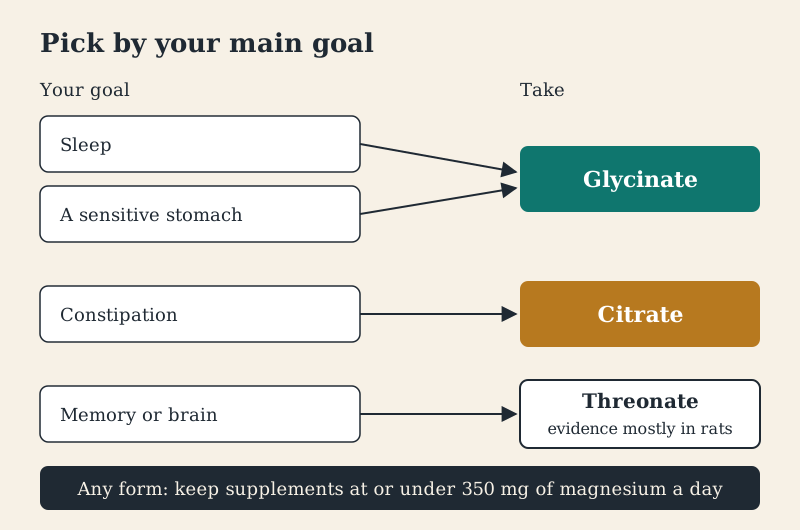
- Sleep: glycinate
- Sensitive stomach: glycinate
- Constipation: citrate
- History of kidney stones: ask your doctor about citrate, since the trial used potassium-magnesium citrate
- Memory or brain: threonate, though the evidence is mostly in rats
Magnesium glycinate vs citrate at a glance
| Factor | Magnesium glycinate | Magnesium citrate |
|---|---|---|
| What it is | Magnesium bound to the amino acid glycine | Magnesium bound to citric acid |
| Absorption | Matched oxide (23.5% vs 22.8%) in 12 people missing part of the small intestine; no percentage in healthy people | Better than oxide; slightly ahead of a chelate in a head-to-head trial |
| Magnesium by weight | About 14% (an 893 mg capsule holds 125 mg) | Varies by product; check the label |
| Gut effects | Usually mild | Loosens stools; also sold as a laxative |
| Sleep trial | Small benefit (155 adults, 4 weeks) | No better than placebo (100 adults, 7 weeks) |
| When people take it | 30 to 60 minutes before bed | Morning, or whenever constipation is the goal |
What about magnesium threonate?
Threonate is for a different goal, raising magnesium in the brain. It gets its own section below.
What is magnesium glycinate?
How glycinate is made
Magnesium glycinate, often labelled bisglycinate, is magnesium bound to two molecules of glycine, a form called a chelate. Part of it may be absorbed intact, through the route the gut uses for small peptides. In a 1994 trial in 12 people missing part of their small intestine, all of them tolerated glycinate better than magnesium oxide.
Why glycine matters for sleep
Glycine has its own small body of sleep research, run by Ajinomoto, which makes glycine. Taken before bed, glycine improved self-rated sleep in people with insomnia tendencies, and 3 g reduced next-day fatigue after short nights. In rats, glycine lowers core body temperature, one of the signals that comes before sleep.
There's a catch in the dose. In the 2025 glycinate trial, 250 mg of magnesium came with 1,523 mg of glycine, about half the 3 g used in the glycine studies. More on that in glycine for sleep.
The absorption question
You'll see "glycinate absorbs at 80%" on many sites. No study in healthy people gives that figure. An isotope study in 12 people missing part of the small intestine measured 23.5% absorbed from glycinate and 22.8% from oxide. The authors of the 2025 glycinate trial put it plainly: "clinical evidence directly comparing their absorption remains limited."
The clearest number in this area belongs to a third form. In a 2001 study, the body absorbed only about 4% of the magnesium in magnesium oxide.
What is magnesium citrate?
How citrate is made
Magnesium citrate is magnesium bound to citric acid. In a 1990 lab test, 55% of it dissolved in plain water, and magnesium oxide barely dissolved at all. Forms that dissolve well are absorbed more completely, and the NIH lists citrate among the better-absorbed forms.
The laxative effect
Magnesium citrate pulls water into the stool. That's why it's also sold as a saline laxative. At laxative doses it usually works within 30 minutes to 6 hours, a poor fit for bedtime.
Supplement doses are smaller, but if citrate loosens your stools, keep it away from bedtime. As a laxative, MedlinePlus advises against using it for more than a week unless your doctor says so.
Citrate and kidney stones
Citrate has trial evidence against kidney stones. In a trial of 64 people with repeat calcium oxalate stones, followed for up to 3 years, new stones formed in 63.6% of the placebo group and 12.9% of those taking potassium-magnesium citrate. That was a combination product, not an over-the-counter magnesium citrate supplement. If stones are your reason, ask your doctor which citrate to take.
Magnesium glycinate vs citrate: key differences
Absorption
In a head-to-head human trial of citrate and an amino-acid chelate, the family glycinate belongs to, citrate came out slightly ahead. Walker and colleagues gave 46 healthy people 300 mg of magnesium a day for 60 days. Citrate produced the highest blood magnesium after the first dose and after 60 days. Citrate and the chelate both beat oxide, which did no better than placebo.
The "30%" on some sites probably comes from the NIH figure that the body absorbs 30% to 40% of the magnesium in food. That's about food in general, not citrate.
Sleep evidence
This is where the forms differ most, and the trials are few:
- Glycinate, Schuster 2025. 155 adults aged 18 to 65 with poor sleep took 250 mg of magnesium as bisglycinate or a placebo for 4 weeks. Insomnia scores fell by 3.9 points versus 2.3 on placebo. In the authors' words, "The effect size was small (Cohen's d = 0.2)." Stress and mood scores didn't change.
- Citrate, Nielsen 2010. 100 adults aged 51 to 85 took 320 mg of magnesium as citrate or a placebo for 7 weeks. Sleep scores improved in both groups, with no difference between them.
- Oxide, Abbasi 2012. 46 older adults with insomnia took 500 mg of magnesium a day as magnesium oxide for 8 weeks. Their insomnia scores, sleep efficiency and time to fall asleep improved. Some sites cite this as a glycinate trial. It used oxide.
Across 3 trials in 151 older adults, a 2021 meta-analysis found magnesium cut the time to fall asleep by about 17 minutes, though it rated the evidence low to very low quality. Form doesn't explain the mixed results. The clearest positive trial used oxide, the poorly absorbed one.
Side effects and gut tolerance
High doses of any magnesium supplement can cause diarrhea, nausea and cramps. In the glycinate trial, nobody dropped out because of side effects.
Cost and how to read the label
Citrate is often the cheaper of the two, but compare price per mg of elemental magnesium. To find it, read the Supplement Facts panel. It lists elemental magnesium, meaning the magnesium itself rather than the weight of the whole compound. In the glycinate trial, each 893 mg capsule held 125 mg of magnesium.
Where magnesium threonate fits
Threonate was developed to raise magnesium in the brain, and in a 2010 study it did that in rats. The main human sleep trial gave 80 adults aged 35 to 55 either 1 g a day of magnesium L-threonate or a placebo for 21 days, and Oura ring scores for deep and REM sleep improved. Three of the six authors work for AIDP, which distributes the ingredient. More in magnesium threonate for sleep.
Huberman's sleep newsletter suggests 145 mg magnesium threonate and names 200 mg magnesium bisglycinate as the alternative. If you're building that stack, see Huberman's sleep cocktail.
When to use magnesium glycinate vs citrate
Use glycinate when...
- Sleep is the goal. Its sleep trial was positive, though the effect was small.
- Your stomach is sensitive, or citrate has loosened your stools before.
- You take it at night and don't want a laxative effect.
Use citrate when...
- Constipation is part of the problem.
- Kidney stones run in your history, after a talk with your doctor.
Can you take both together?
Yes, as long as the two together stay within 350 mg of magnesium a day from supplements. Add up the elemental magnesium on both labels before you start.
Dosage and timing for each form
Daily magnesium requirements
The recommended dietary allowance for adults is between 310 and 420 mg a day, depending on age and sex.
How much to take from a supplement
The NIH's upper limit for adults is 350 mg a day from supplements and medicines. Food doesn't count toward it. High doses from supplements can cause diarrhea.
The sleep trials used 250 mg a day of glycinate, 320 mg of citrate and 500 mg of oxide, counting the magnesium only. The oxide trial's 500 mg is above the upper limit, so start at 250 mg or less and go higher only with a doctor.
When to take each form
The glycinate trial had people take their capsules 30 to 60 minutes before bed. If citrate loosens your stools, take it in the morning. No trial has tested citrate timing.
How long before you see results
In the glycinate trial, most of the improvement showed up in the first 14 days of the 4-week course. As a rule of thumb, give a new form two to four weeks.
Who should check with a doctor first
- Kidney disease. Your kidneys clear extra magnesium. Dangerously high blood magnesium is seen almost only in people with poor kidney function who take a lot of it in supplements, laxatives or antacids.
- Antibiotics and osteoporosis drugs. Magnesium can interact with tetracycline and quinolone antibiotics, such as doxycycline or ciprofloxacin, and with bisphosphonates such as alendronate. Ask your pharmacist how far apart to take them. For magnesium citrate, MedlinePlus advises taking other medicines at least 2 hours before or after it.
- Diabetes. People with type 2 diabetes are more likely to run low on magnesium. Insulin resistance lowers blood magnesium, and low magnesium can in turn worsen insulin resistance, so ask your doctor to check your levels.
What affects magnesium absorption and status
Vitamin D
The enzymes that activate vitamin D need magnesium. In a 2018 trial of 180 adults aged 40 to 85, magnesium raised vitamin D in people who started near 30 ng/mL and lowered it in those who started higher. If you take vitamin D, it's one more reason to get enough magnesium.
Why blood tests can miss low magnesium
Your body holds about 25 g of magnesium, 50% to 60% of it in bone and most of the rest in soft tissue. Less than 1% is in blood serum, and that level is tightly controlled, so a normal blood test doesn't prove your total magnesium is normal.
Magnesium is one part of better sleep
The sleep trials above show small effects at best, so treat magnesium as one piece of a wind-down. If a racing mind keeps you up, a short NSDR session in bed may help you settle. NSDR for sleep covers how to do it.
FAQ
Which magnesium is better for sleep, glycinate or citrate?
Glycinate is better for sleep on current evidence. Its trial showed a small benefit, and it isn't used as a laxative. A citrate sleep trial did no better than placebo.
Can you take magnesium glycinate and citrate together?
Yes, you can take them together if the combined magnesium stays at or under 350 mg a day from supplements. One way to split them is citrate in the morning and glycinate at night.
What are the side effects of magnesium glycinate vs citrate?
Diarrhea, nausea and cramps are the side effects to watch for with both forms, mainly at high doses. Citrate is the one also sold as a laxative, so if your gut complains, lower the dose or switch to glycinate.
How much magnesium should I take daily?
Adults need 310 to 420 mg of magnesium daily, depending on age and sex, counting food and supplements. Take no more than 350 mg a day from supplements unless your doctor says otherwise.
Is magnesium glycinate or threonate better for anxiety?
Neither has good anxiety evidence. In the glycinate sleep trial, stress and mood scores didn't change, and threonate's brain data come mainly from rats. For options with more research behind them, see supplements for anxiety.
Sources
- NIH Office of Dietary Supplements. Magnesium: Fact Sheet for Health Professionals (updated 6 January 2026). https://ods.od.nih.gov/factsheets/Magnesium-HealthProfessional/
- MedlinePlus. Magnesium Citrate (drug information). https://medlineplus.gov/druginfo/meds/a619019.html
- Walker AF, Marakis G, Christie S, Byng M. 2003. Mg citrate found more bioavailable than other Mg preparations in a randomised, double-blind study. Magnesium Research. https://pubmed.ncbi.nlm.nih.gov/14596323/
- Firoz M, Graber M. 2001. Bioavailability of US commercial magnesium preparations. Magnesium Research. https://pubmed.ncbi.nlm.nih.gov/11794633/
- Lindberg JS et al. 1990. Magnesium bioavailability from magnesium citrate and magnesium oxide. Journal of the American College of Nutrition. https://pubmed.ncbi.nlm.nih.gov/2407766/
- Schuette SA, Lashner BA, Janghorbani M. 1994. Bioavailability of magnesium diglycinate vs magnesium oxide in patients with ileal resection. Journal of Parenteral and Enteral Nutrition. https://pubmed.ncbi.nlm.nih.gov/7815675/
- Schuster J et al. 2025. Magnesium bisglycinate supplementation in healthy adults reporting poor sleep: a randomized, placebo-controlled trial. Nature and Science of Sleep. https://pubmed.ncbi.nlm.nih.gov/40918053/
- Nielsen FH, Johnson LK, Zeng H. 2010. Magnesium supplementation improves indicators of low magnesium status and inflammatory stress in adults older than 51 years with poor quality sleep. Magnesium Research. https://pubmed.ncbi.nlm.nih.gov/21199787/
- Abbasi B et al. 2012. The effect of magnesium supplementation on primary insomnia in elderly: a double-blind placebo-controlled clinical trial. Journal of Research in Medical Sciences. https://pubmed.ncbi.nlm.nih.gov/23853635/
- Mah J, Pitre T. 2021. Oral magnesium supplementation for insomnia in older adults: a systematic review and meta-analysis. BMC Complementary Medicine and Therapies. https://pubmed.ncbi.nlm.nih.gov/33865376/
- Bannai M, Kawai N. 2012. New therapeutic strategy for amino acid medicine: glycine improves the quality of sleep. Journal of Pharmacological Sciences. https://pubmed.ncbi.nlm.nih.gov/22293292/ [Ajinomoto]
- Bannai M et al. 2012. The effects of glycine on subjective daytime performance in partially sleep-restricted healthy volunteers. Frontiers in Neurology. https://pubmed.ncbi.nlm.nih.gov/22529837/ [Ajinomoto]
- Ettinger B et al. 1997. Potassium-magnesium citrate is an effective prophylaxis against recurrent calcium oxalate nephrolithiasis. Journal of Urology. https://pubmed.ncbi.nlm.nih.gov/9366314/
- Slutsky I et al. 2010. Enhancement of learning and memory by elevating brain magnesium. Neuron. https://pubmed.ncbi.nlm.nih.gov/20152124/ [rats]
- Hausenblas HA et al. 2024. Magnesium-L-threonate improves sleep quality and daytime functioning in adults with self-reported sleep problems: a randomized controlled trial. Sleep Medicine: X. https://pubmed.ncbi.nlm.nih.gov/39252819/ [AIDP co-authors]
- Huberman A. 2021. Toolkit for Sleep. Huberman Lab Neural Network newsletter. https://www.hubermanlab.com/newsletter/toolkit-for-sleep
- Van Laecke S. 2019. Hypomagnesemia and hypermagnesemia. Acta Clinica Belgica. https://pubmed.ncbi.nlm.nih.gov/30220246/
- Uwitonze AM, Razzaque MS. 2018. Role of magnesium in vitamin D activation and function. Journal of the American Osteopathic Association. https://pubmed.ncbi.nlm.nih.gov/29480918/
- Dai Q et al. 2018. Magnesium status and supplementation influence vitamin D status and metabolism: results from a randomized trial. American Journal of Clinical Nutrition. https://pubmed.ncbi.nlm.nih.gov/30541089/
- Gommers LM, Hoenderop JG, Bindels RJ, de Baaij JH. 2016. Hypomagnesemia in type 2 diabetes: a vicious circle? Diabetes. https://pubmed.ncbi.nlm.nih.gov/26696633/
- Jahnen-Dechent W, Ketteler M. 2012. Magnesium basics. Clinical Kidney Journal. https://pubmed.ncbi.nlm.nih.gov/26069819/