How to improve memory: test yourself instead of rereading, spread your reviews over days, give new material 10 quiet minutes and a full night's sleep, and keep up regular aerobic exercise. All have been tested in human trials.
What you do in the minutes and hours after learning matters too. Each tip below comes with the size of the study behind it, because some popular claims are weaker than they sound.
TL;DR
- Test yourself. Recalling material beats rereading it for a test days away.
- Space your reviews. For a test in a week, review after a day or two. For something you want in a year, review after about a month.
- Rest for 10 minutes after learning. Quiet rest gives a small boost over starting another task.
- Sleep 7 to 9 hours. During deep sleep the brain replays what you learned that day.
- Walk often. In older adults, 40 minutes of walking three days a week for a year grew the hippocampus by about 2%.
- Bring chronic stress down. In one trial, 13 minutes of daily guided meditation improved attention and memory after 8 weeks, but not after 4.
The science of memory formation
Working memory holds about four meaningful chunks at once, 3 to 5 in young adults, according to the psychologist Nelson Cowan's reviews. That bottleneck sits at encoding, the first of memory's three stages. Consolidation then stabilises what you took in, and retrieval pulls it back out.
Consolidation happens mostly offline. A 2013 review by Björn Rasch and Jan Born describes sleep as a brain state that optimises consolidation. During deep (slow-wave) sleep, the brain reactivates recently learned patterns and moves them into long-term storage, and the REM sleep that follows may stabilise them. Quiet waking rest gives a small benefit too.
So how to improve memory depends on all three: how you study, what you do right after, and how you sleep.
Memory techniques that work
Test yourself instead of rereading
In a 2006 study by Henry Roediger and Jeffrey Karpicke, students read a prose passage and then either reread it or wrote down everything they could remember. Five minutes later, the rereaders did better. Two days and a week later, the self-testers remembered much more. The rereaders also felt more confident.
A 2013 review of ten study techniques by John Dunlosky and colleagues rated two as high utility: practice testing and spacing. Rereading, highlighting and summarising rated low.
To do it, close the book, write or say what you remember, then check what you missed. Flashcards work the same way.
Spaced repetition
The same study time spread across several sessions beats one long block. A 2006 review by Nicholas Cepeda's group analysed 317 experiments on this spacing effect.
How far apart? A 2008 study from the same group taught facts to more than 1,350 people and varied the gap before a review. For a test a week away, the best gap was about 20 to 40% of that week. For a test a year away, it fell to 5 to 10% of the year. In practice:
- Exam in a week: review after one to three days.
- Want it in a year: review after about a month.
The memory palace (method of loci)
The memory palace dates back about 2,500 years to ancient Greece, as the science journalist Joshua Foer tells it in his TED talk. You picture a place you know well, such as your home, and leave vivid images of each item at points along a route through it. To recall them, you walk the route in your head.
Foer covered the United States Memory Championship as a science journalist, came back a year later to enter it, and won. "This is actually not about training your memory," he said. The skill is dreaming up "utterly ludicrous, raunchy, hilarious, and hopefully unforgettable images in your mind's eye."
A 2003 brain-imaging study by Eleanor Maguire at University College London found no structural brain differences in top memorisers. They used a spatial strategy that engaged the hippocampus. In a 2017 study led by Martin Dresler, 51 men new to the method were split into three groups, and only one trained in the memory palace, with 40 half-hour sessions over six weeks. That group's brain networks shifted toward the memory athletes' pattern. Across all 51 men, the closer the match, the bigger the memory gain, up to four months later.
Use it for lists, names, numbers and speeches. Dunlosky's review rated image-based mnemonics low for textbook learning, where self-testing does more.
Chunking and association hooks
Working memory's limit counts chunks rather than single items. Grouping a phone number into three parts, or ideas into a few themes, lets more fit.
Foer explains association with the Baker/baker paradox. Tell one person to remember a man named Baker and another to remember a man who is a baker. The one given the surname is less likely to remember the word, because the name Baker means nothing on its own. Bakers wear white hats, have flour on their hands and smell good when they get home, and Foer calls details like these "associational hooks".
Rest-based memory consolidation
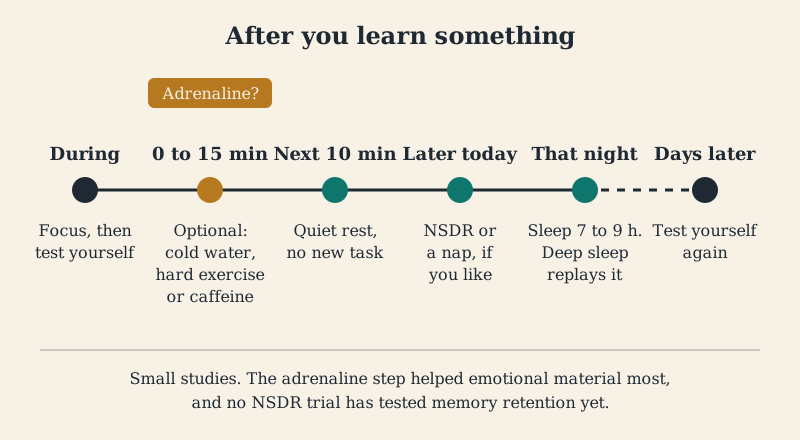
The first 10 minutes: quiet rest
In a 2012 Edinburgh study, people were given two stories. One was followed by 10 minutes of wakeful rest, the other by 10 minutes of a spot-the-difference game. They remembered the rested-on story better 15 to 30 minutes later and again a week later (Dewar 2012).
A 2019 meta-analysis of 10 similar studies, from Erin Wamsley's lab, found the benefit is small but significant, and that it seems to need a mind free of outside tasks and spontaneous thought.
Adrenaline timing: after, not before
On his 2022 memory episode, the Stanford neuroscientist Andrew Huberman says the best window to raise adrenaline for memory is "immediately after or just a few minutes, 5, 10, maybe 15 minutes, after" learning. He suggests cold water, a hard burst of exercise or caffeine.
The human studies behind this are small:
- Caffeine. In a Johns Hopkins trial, young adults who rarely had caffeine took a placebo or 100, 200 or 300 mg straight after looking at pictures. A day later, the 200 mg group (35 people, against 38 on placebo) was better at telling near-duplicates from the originals, by a borderline margin (P = 0.049). 100 mg was no different from placebo (Borota 2014).
- Cold. Holding an arm in ice water up to the elbow after viewing slides improved memory a week later for the emotional slides, and made no difference for the neutral ones (Cahill 2003). Nobody has tested cold showers after studying.
- Exercise. Six minutes of cycling at 70% of VO2 max after viewing emotional images improved memory for them in older adults, including people with mild cognitive impairment (Segal 2012).
If you already use caffeine timing for focus, try moving the cup to the end of a study block, at least 8.8 hours before bed (Gardiner 2023). If you're prone to panic attacks, skip it, as Huberman advises, and if you don't usually have caffeine, he says check with your doctor first.
Where NSDR fits
No NSDR trial has tested memory retention after learning. A 2024 Harvard master's thesis gave NSDR to 27 sleep-deprived students and found no significant effect on working memory (Akram 2024). The closest evidence is the quiet-rest research above and one small yoga nidra study. Twelve experienced meditators at a yoga centre, in two groups, practised a key-press sequence. Three hours later one group did a 30-minute yoga nidra session while the other did light work duties. The yoga nidra group later performed the practised sequence better (Immink 2016).
Order matters. Huberman says to raise alertness immediately after learning, and that NSDR, a nap or deep sleep "can be performed some hours later". So an NSDR session fits later in the day, as rest that leaves the material alone. There's more on using NSDR after a study session.
Lifestyle factors that support memory
Sleep
Mayo Clinic advises adults to sleep 7 to 9 hours a night, and links both short sleep and restless, broken sleep to memory loss. Huberman puts the reason in one line: "it's in these naps and in deep sleep that the actual reconfiguration of the neural circuits occurs."
See what happens in each stage of sleep and how to get more deep sleep.
Exercise and the osteocalcin connection
Mayo Clinic points to the general guideline: at least 150 minutes a week of moderate aerobic activity, such as brisk walking, or 75 minutes of vigorous activity, such as jogging.
The best human trial is Kirk Erickson's 2011 study. 120 older adults either walked for 40 minutes three days a week or did stretching, for a year. The walkers' hippocampus grew by about 2% and their spatial memory improved. The stretching group's shrank by about 1.4%.
Huberman cites 180 to 200 minutes a week of zone 2 cardio as, it appears, the minimum for some longevity benefits. He says any effect on new brain cells is indirect, and scientists still debate whether adults grow many at all.
Osteocalcin is a hormone made by bone. In mice it crosses into the brain and supports memory, and extra osteocalcin improved memory in old mice (Oury 2013; Khrimian 2017). Huberman suggests load-bearing exercise releases it, but notes nobody has tested weightlifting directly.
Nutrition for brain health
Most diet evidence is observational. Among 16,010 women over 70, those who ate the most blueberries and strawberries declined more slowly, by up to 2.5 years of cognitive ageing (Devore 2012). In 960 older adults, the top fifth for leafy greens, at about 1.3 servings a day, declined at a rate equal to being 11 years younger (Morris 2018). Neither design can show the food caused it.
The trials are humbling. In a trial published in 2023, 604 older adults with a family history of dementia and a poor diet followed the MIND diet or a control diet for three years, both eating slightly fewer calories. Both groups improved a little on cognitive tests, with no significant difference between them (Barnes 2023). A Cochrane review of three omega-3 trials, with more than 3,500 healthy older people followed up, found no benefit for memory or thinking (Sydenham 2012).
Eat well for your general health, and skip omega-3 pills if memory is the only reason. Too much alcohol can cause confusion and memory loss, Mayo Clinic notes.
Nervous system regulation
How stress impairs memory
Timing decides whether stress helps or hurts. A short burst after learning can strengthen memory for emotional material, as in the ice-water study. During a task, even quite mild stress you can't control can cause a rapid loss of prefrontal thinking skills, according to a 2009 review by Amy Arnsten at Yale.
Long-term exposure to stress hormones also affects the brain structures involved in cognition and mental health, according to a 2009 review by Sonia Lupien and colleagues. If cortisol is the problem, start with lowering cortisol through sleep and daily timing.
The 13-minute meditation study
In a 2019 study from Wendy Suzuki's lab at NYU, adults aged 18 to 45 who had never meditated did a 13-minute guided meditation daily, while a control group listened to a podcast. After 8 weeks, but not 4, the meditators had better attention, working memory and recognition memory, and less negative mood (Basso 2019).
One catch. Sleep quality got worse in the meditation group, and most of them meditated between 8 and 11 p.m. Huberman's guess is that focused attention late in the day keeps the brain too alert, so he plans to meditate early in the day and not past about 5 p.m. A low-attention practice like NSDR may suit the evening better.
When memory problems need a doctor
Forgetting names or keys is normal. Mayo Clinic advises getting checked if memory loss affects your daily activities, seems to be getting worse, or worries a family member or friend. Ask a clinician to review your medicines too, since some affect memory, and to help manage conditions such as high blood pressure, diabetes, depression and hearing loss.
FAQ
What are the best ways to improve memory quickly?
How to improve memory fast for something you're learning now: test yourself instead of rereading, take 10 quiet minutes before starting anything else, and sleep 7 to 9 hours that night. If you already drink coffee, having it after studying is a reasonable experiment, as long as it's well before bed.
How can I improve my memory naturally?
Sleep 7 to 9 hours, get at least 150 minutes of brisk walking or similar exercise a week, and study by testing yourself with reviews spaced over days. Ten quiet minutes after learning help a little too. None of it needs supplements.
Does exercise really help improve memory?
Yes, with the best evidence in older adults. A year of walking 40 minutes, three days a week, grew the hippocampus by about 2% and improved spatial memory. Six minutes of cycling straight after learning also helped older adults remember emotional pictures in one study.
What foods help improve memory?
Berries and leafy greens are the foods most linked with slower memory decline, in large observational studies of older adults. Trials are less encouraging: the MIND diet did no better than a control diet over three years, and omega-3 supplements showed no benefit in healthy older people.
Can NSDR help with memory?
No NSDR trial has tested memory retention after learning, and one small thesis found no clear effect on working memory. Quiet waking rest after learning gives a small benefit, and one 12-person yoga nidra study found better performance on a practised motor sequence. Use NSDR as rest later in the day, and keep sleep as the main event.
Sources
- Akram G (2024). Testing Non-Sleep Deep Rest (NSDR) protocol to counter the cognitive consequences of short sleep in young adult students. ALM thesis, Harvard University Division of Continuing Education. https://dash.harvard.edu/entities/publication/68e0b583-681d-4143-b56b-4e214ca855a7
- Arnsten AF (2009). Stress signalling pathways that impair prefrontal cortex structure and function. Nature Reviews Neuroscience. https://pubmed.ncbi.nlm.nih.gov/19455173/
- Barnes LL et al. (2023). Trial of the MIND diet for prevention of cognitive decline in older persons. New England Journal of Medicine. https://pubmed.ncbi.nlm.nih.gov/37466280/
- Basso JC, McHale A, Ende V, Oberlin DJ, Suzuki WA (2019). Brief, daily meditation enhances attention, memory, mood, and emotional regulation in non-experienced meditators. Behavioural Brain Research. https://pubmed.ncbi.nlm.nih.gov/30153464/
- Borota D et al. (2014). Post-study caffeine administration enhances memory consolidation in humans. Nature Neuroscience. https://pubmed.ncbi.nlm.nih.gov/24413697/
- Cahill L, Gorski L, Le K (2003). Enhanced human memory consolidation with post-learning stress: interaction with the degree of arousal at encoding. Learning & Memory. https://pubmed.ncbi.nlm.nih.gov/12888545/
- Cepeda NJ, Pashler H, Vul E, Wixted JT, Rohrer D (2006). Distributed practice in verbal recall tasks: a review and quantitative synthesis. Psychological Bulletin. https://pubmed.ncbi.nlm.nih.gov/16719566/
- Cepeda NJ, Vul E, Rohrer D, Wixted JT, Pashler H (2008). Spacing effects in learning: a temporal ridgeline of optimal retention. Psychological Science. https://pubmed.ncbi.nlm.nih.gov/19076480/
- Cowan N (2001). The magical number 4 in short-term memory: a reconsideration of mental storage capacity. Behavioral and Brain Sciences. https://pubmed.ncbi.nlm.nih.gov/11515286/
- Cowan N (2010). The magical mystery four: how is working memory capacity limited, and why? Current Directions in Psychological Science. https://pubmed.ncbi.nlm.nih.gov/20445769/
- Devore EE, Kang JH, Breteler MM, Grodstein F (2012). Dietary intakes of berries and flavonoids in relation to cognitive decline. Annals of Neurology. https://pubmed.ncbi.nlm.nih.gov/22535616/
- Dewar M, Alber J, Butler C, Cowan N, Della Sala S (2012). Brief wakeful resting boosts new memories over the long term. Psychological Science. https://pubmed.ncbi.nlm.nih.gov/22829465/
- Dresler M et al. (2017). Mnemonic training reshapes brain networks to support superior memory. Neuron. https://pubmed.ncbi.nlm.nih.gov/28279356/
- Dunlosky J, Rawson KA, Marsh EJ, Nathan MJ, Willingham DT (2013). Improving students' learning with effective learning techniques. Psychological Science in the Public Interest. https://pubmed.ncbi.nlm.nih.gov/26173288/
- Erickson KI et al. (2011). Exercise training increases size of hippocampus and improves memory. PNAS. https://pubmed.ncbi.nlm.nih.gov/21282661/
- Foer J (2012). Feats of memory anyone can do. TED. https://www.ted.com/talks/joshua_foer_feats_of_memory_anyone_can_do
- Gardiner C et al. (2023). The effect of caffeine on subsequent sleep: a systematic review and meta-analysis. Sleep Medicine Reviews. https://pubmed.ncbi.nlm.nih.gov/36870101/
- Huberman A (2022). Understand & improve memory using science-based tools. Huberman Lab podcast. https://www.hubermanlab.com/episode/understand-and-improve-memory-using-science-based-tools
- Humiston GB, Tucker MA, Summer T, Wamsley EJ (2019). Resting states and memory consolidation: a preregistered replication and meta-analysis. Scientific Reports. https://pubmed.ncbi.nlm.nih.gov/31852988/
- Immink MA (2016). Post-training meditation promotes motor memory consolidation. Frontiers in Psychology. https://pubmed.ncbi.nlm.nih.gov/27847492/
- Khrimian L et al. (2017). Gpr158 mediates osteocalcin's regulation of cognition. Journal of Experimental Medicine. https://pubmed.ncbi.nlm.nih.gov/28851741/
- Lupien SJ, McEwen BS, Gunnar MR, Heim C (2009). Effects of stress throughout the lifespan on the brain, behaviour and cognition. Nature Reviews Neuroscience. https://pubmed.ncbi.nlm.nih.gov/19401723/
- Maguire EA, Valentine ER, Wilding JM, Kapur N (2003). Routes to remembering: the brains behind superior memory. Nature Neuroscience. https://pubmed.ncbi.nlm.nih.gov/12483214/
- Mayo Clinic Staff (2026). Memory loss: 7 tips to improve your memory. Mayo Clinic. https://www.mayoclinic.org/healthy-lifestyle/healthy-aging/in-depth/memory-loss/art-20046518
- Morris MC et al. (2018). Nutrients and bioactives in green leafy vegetables and cognitive decline: prospective study. Neurology. https://pubmed.ncbi.nlm.nih.gov/29263222/
- Oury F et al. (2013). Maternal and offspring pools of osteocalcin influence brain development and functions. Cell. https://pubmed.ncbi.nlm.nih.gov/24074871/
- Rasch B, Born J (2013). About sleep's role in memory. Physiological Reviews. https://pubmed.ncbi.nlm.nih.gov/23589831/
- Roediger HL, Karpicke JD (2006). Test-enhanced learning: taking memory tests improves long-term retention. Psychological Science. https://pubmed.ncbi.nlm.nih.gov/16507066/
- Segal SK, Cotman CW, Cahill LF (2012). Exercise-induced noradrenergic activation enhances memory consolidation in both normal aging and patients with amnestic mild cognitive impairment. Journal of Alzheimer's Disease. https://pubmed.ncbi.nlm.nih.gov/22914593/
- Sydenham E, Dangour AD, Lim WS (2012). Omega 3 fatty acid for the prevention of cognitive decline and dementia. Cochrane Database of Systematic Reviews. https://pubmed.ncbi.nlm.nih.gov/22696350/