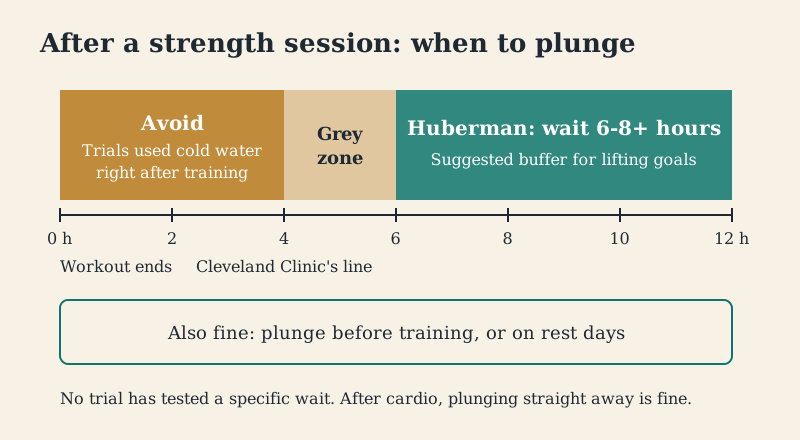
Cold plunge after workout timing depends on what you trained. If you lift to build muscle, don't get in straight after. Huberman's advice is to wait 6 to 8 hours or more, or to plunge before you train. Treat that number as a cautious buffer. The studies that found smaller gains put people in cold water straight after training, and none of them tested how long a wait is enough. After a run, a match or a hard conditioning session, a plunge straight away is fine and can help you feel more recovered the next day.
Quick answer
- After strength training, wait 6-8 hours, or plunge before you train or on rest days.
- After cardio, or between competition days, plunging straight away is fine.
- The pooled cost to muscle growth was small, and it came from regular use.
- Start at 50-59°F (10-15°C) for a minute or two, and never stay in longer than five minutes.
- Sleep and training load come first. A plunge is an add-on.
The cold plunge timing debate
Both sides have evidence. Cold water makes people feel less sore, and used straight after lifting it also seems to shrink the muscle they build.
What happens to muscle growth
In a 2015 trial by Roberts and colleagues, 21 active men lifted twice a week for 12 weeks. After every session, one group sat in cold water for 10 minutes and the other did easy cycling. Strength and muscle mass rose more with cycling, and only the cycling group's type II fibres, the ones that grow most with lifting, got significantly bigger (by 17%).
In a 2019 trial by Fyfe and colleagues, 16 men trained for seven weeks with 15 minutes at 10°C after each session. Their muscle fibres grew less than the control group's, but their leg press strength rose just as much.
A 2024 meta-analysis pooled eight studies like these and found slightly less muscle growth with cold water straight after training. The effect was small, the uncertainty range crossed zero, and the authors rated the studies fair to poor.
Benjamin Gordon, PhD, an applied physiologist at the University of Florida, put it this way to Peloton: "Over time, if a person is training long-term with resistance training and doing cold water immersion after repeatedly, [there's] a negative effect on training adaptations and a decrease in strength gain over time."
Why cold slows growth
The usual explanation is that cold blunts the inflammation muscles need to rebuild. The evidence doesn't back it. In a 2017 biopsy study from the same group, nine men did leg training followed by 10 minutes of cold water or easy cycling, and inflammation in the muscle over the next two days was no different.
What cold water does slow is the signalling that builds muscle. In the 2015 paper, satellite cells (repair cells that help fibres grow) and a key growth enzyme were less active after cold water. Fyfe found a main growth pathway blunted an hour after training and still lower two days later. In a 2020 study, 12 young men put one leg in 8°C water and the other in 30°C water after lifting. The cold leg built muscle protein more slowly over the next five hours, and over two weeks of training.
What cold water does help
It helps with soreness and next-day recovery. A 2012 Cochrane review of 17 small trials (366 people) found less soreness with cold water than with rest for up to four days, though the authors rated the studies low quality. A 2022 meta-analysis of 52 studies found that after high-intensity exercise, people who sat in cold water had more power, less soreness and felt more recovered 24 hours later. Strength came back no faster.
Part of that is expectation. In a 2014 trial, 30 men did sprint intervals and then sat in cold water, a lukewarm placebo bath or a plain lukewarm bath. The placebo bath restored strength over 48 hours as well as the cold water did.
Recover or adapt
Huberman's newsletter makes one exception to its timing rule, for when your goal is "simply to recover without adaptation", as in competition. If you play again tomorrow and aren't trying to get stronger this week, a cold plunge after workout sessions makes sense. In a phase where you're building muscle, keep the cold away from training.
The 6-8 hour rule: when to cold plunge
Where 6-8 hours comes from
The figure is from Huberman's 2022 newsletter on cold exposure. He writes that cold water immersion, but not cold showers, "can limit some of the gains in hypertrophy, strength or endurance if done in the 4 hours or so after training. It's better to wait 6 to 8 or more hours until after training, or do it before training."
Cleveland Clinic draws its line at four hours. "If not timed right, cold therapy can interfere with muscle gains," says Dominic King, DO, a sports medicine physician there, and the clinic says this is especially true within four hours of a muscle-building workout. One plunge-tub seller says two to four hours, with no source.
What no study has tested
Every muscle-growth trial above put people in cold water straight after training, for 10 to 20 minutes. None of them compared plunging at two, four or eight hours, and the muscle changes were still measurable 48 hours later, so even eight hours is a hedge. Whether a two-minute home plunge has the same effect is unknown too. Take 6-8 hours as a sensible default, or plunge on rest days and skip the question.
What Chris Bumstead does
Chris Bumstead, who won six Classic Physique Olympia titles before retiring in 2024, told his followers he plunges away from training. "I have always tried to be vocal that I do not cold plunge to benefit my hypertrophy training," he said, as quoted by BarBend.
When a plunge straight away makes sense
- After runs, rides and other endurance work.
- When you compete again within a day or two.
- When feeling less sore matters more to you than adding muscle.
- In a deload week, when adaptation isn't the goal.
Cold plunge by training goal
Building muscle
Plunge on rest days, or leave 6-8 hours after lifting. Before training is Huberman's other option. Cold muscles can lose strength, power and sprinting speed, Peloton notes from a 2017 review by Mike Tipton, so leave time to rewarm before you lift. The trials measured regular use, so an occasional plunge after a session is unlikely to undo your training.
Strength
The evidence is mixed. A 2021 meta-analysis of eight studies in Sports Medicine found smaller strength gains with regular cold water after lifting. A 2023 meta-analysis of 10 studies found a small effect overall and no significant difference with whole-body immersion, and in Fyfe's trial strength rose equally. Use the same default as for muscle.
Cardio and endurance
The 2021 meta-analysis found that regular cold water had no effect on endurance performance, so a plunge straight after a run or a long zone 2 cardio session is a reasonable call. Huberman does list endurance among the gains cold might limit, so in a long aerobic build the buffer costs little.
Mood and alertness
In a 2023 study, 33 healthy adults new to cold water sat in 20°C (68°F) water for five minutes and afterwards said they felt more active, alert, attentive, proud and inspired, and less distressed and nervous. It was small, relied on self-report with no comparison group, and used water far warmer than a typical plunge. Huberman suggests plunging early in the day for alertness, so on a lifting day a morning plunge before an evening session fits both.
The right cold plunge protocol
Temperature
Cleveland Clinic's beginner range is 50-59°F (10-15°C), and it advises never going below 40°F (4°C). Colder isn't better. Gordon notes that research used water in the 50-60°F range, warmer than many ice-filled home tubs. The cold plunge temperature guide has a four-week plan.
How long
Start with a minute or two, and never go past five minutes. "Start slow and see what your body can tolerate before staying in longer," says King. Tipton, a professor of human and applied physiology at the University of Portsmouth, told Peloton: "If there is a benefit, it probably comes from the first minute of immersion (also the most dangerous period)."
How often
Huberman suggests about 11 minutes a week in total, over 2-4 sessions of 1-5 minutes. The figure comes from Susanna Søberg's research on winter swimmers who dipped two to three times a week. It wasn't tested against other doses, and it wasn't measured for recovery.
Ending on cold
Søberg's advice is to finish with cold and let your body rewarm itself, which keeps brown fat and muscle working to make heat. Nobody has compared this with a warm shower. If you're shivering hard or can't warm up, get warm. If a tub isn't practical, see cold shower vs cold plunge. Huberman says showers don't carry the same risk to gains.
Safety and who should avoid cold plunging
Check with a doctor first
"Contrary to popular belief, not everyone can, or should, do cold water immersion," Tipton told Peloton. Cold water tightens blood vessels, which raises blood pressure and makes the heart work harder. Cleveland Clinic lists heart disease, high blood pressure, diabetes, pregnancy, peripheral neuropathy, poor circulation, venous stasis and cold agglutinin disease. Cleveland Clinic also tells people with Raynaud's to avoid putting their hands in cold water, and DermNet says swimming in cold water is the most common cause of a severe reaction in cold urticaria (hives from cold). Health note: if any of these apply to you, talk to your doctor before you start.
Safety basics
- Have someone nearby when you're new to it. Cold water can set off fast, uncontrolled breathing, which Cleveland Clinic says is dangerous if it leads to dizziness or fainting in the water.
- Make sure you can climb out easily, because cold limbs get clumsy.
- Keep your head above water, and never hyperventilate on purpose before or during a plunge.
Signs to get out
Get out if you feel lightheaded, can't slow your breathing, feel confused, have chest pain, or start shivering in a way you can't stop.
Recovery beyond the cold plunge
The basics come first
Treat a plunge as an add-on to sleep and sensible training load. Adults need seven or more hours of sleep a night, according to the American Academy of Sleep Medicine and Sleep Research Society. If you're short of it, start with how to sleep better. If you're sore all the time and your lifts are going backwards, check the signs of overtraining before adding cold.
When to downshift instead
Cold water is a stressor. In a 2000 study, young men sat in 14°C water for an hour, and the researchers put the body's response to cold down mainly to the fight-or-flight side of the nervous system. A guided NSDR session goes the other way. You lie still, stay awake and let your breathing slow, which may help you downshift. More on the sympathetic and parasympathetic branches.
FAQ
How long should you wait to cold plunge after a workout?
Wait 6-8 hours after a strength workout before you cold plunge, which is Huberman's advice; Cleveland Clinic warns against the first four hours. The trials only tested plunging straight after training, not a specific wait. After cardio, a cold plunge after workout sessions is fine straight away.
Does cold plunging ruin your gains?
Cold plunging doesn't ruin gains, but regular plunges straight after lifting can make them smaller. A 2024 meta-analysis of eight studies found slightly less muscle growth, a small and uncertain effect. The strength findings are mixed.
How often should you cold plunge for recovery?
For recovery, plunge after the hard sessions you most need to bounce back from, since the studies tested one plunge after each workout. Huberman's 11 minutes a week is a general cold-exposure target from Søberg's winter swimmers and was never tested for recovery.
Is cold plunging good for cardio recovery?
Cold plunging can help cardio recovery, mostly with soreness and how recovered you feel the next day. After high-intensity exercise, a 52-study meta-analysis found more power, less soreness and better perceived recovery 24 hours later, though part of that benefit may be expectation. Regular use didn't harm endurance performance in a 2021 meta-analysis.
What is the optimal cold plunge temperature?
The usual cold plunge temperature is 50-59°F (10-15°C), Cleveland Clinic's beginner range and close to what research used. No study has found one optimal temperature. Stay above 40°F (4°C) and under five minutes.
Sources
- Roberts LA, Raastad T, Markworth JF, et al. (2015). Post-exercise cold water immersion attenuates acute anabolic signalling and long-term adaptations in muscle to strength training. Journal of Physiology, 593(18):4285-4301. https://pubmed.ncbi.nlm.nih.gov/26174323/
- Fyfe JJ, Broatch JR, Trewin AJ, et al. (2019). Cold water immersion attenuates anabolic signaling and skeletal muscle fiber hypertrophy, but not strength gain, following whole-body resistance training. Journal of Applied Physiology, 127(5):1403-1418. https://pubmed.ncbi.nlm.nih.gov/31513450/
- Piñero A, Burke R, Augustin F, et al. (2024). Throwing cold water on muscle growth: A systematic review with meta-analysis of the effects of postexercise cold water immersion on resistance training-induced hypertrophy. European Journal of Sport Science, 24(2):177-189. https://doi.org/10.1002/ejsc.12074
- Peake JM, Roberts LA, Figueiredo VC, et al. (2017). The effects of cold water immersion and active recovery on inflammation and cell stress responses in human skeletal muscle after resistance exercise. Journal of Physiology, 595(3):695-711. https://pubmed.ncbi.nlm.nih.gov/27704555/
- Fuchs CJ, Kouw IWK, Churchward-Venne TA, et al. (2020). Postexercise cooling impairs muscle protein synthesis rates in recreational athletes. Journal of Physiology, 598(4):755-772. https://pubmed.ncbi.nlm.nih.gov/31788800/
- Malta ES, Dutra YM, Broatch JR, Bishop DJ, Zagatto AM (2021). The effects of regular cold-water immersion use on training-induced changes in strength and endurance performance: a systematic review with meta-analysis. Sports Medicine, 51(1):161-174. https://pubmed.ncbi.nlm.nih.gov/33146851/
- Grgic J (2023). Effects of post-exercise cold-water immersion on resistance training-induced gains in muscular strength: a meta-analysis. European Journal of Sport Science, 23(3):372-380. https://pubmed.ncbi.nlm.nih.gov/35068365/
- Moore E, Fuller JT, Buckley JD, et al. (2022). Impact of cold-water immersion compared with passive recovery following a single bout of strenuous exercise on athletic performance in physically active participants: a systematic review with meta-analysis and meta-regression. Sports Medicine, 52(7):1667-1688. https://pubmed.ncbi.nlm.nih.gov/35157264/
- Bleakley C, McDonough S, Gardner E, et al. (2012). Cold-water immersion (cryotherapy) for preventing and treating muscle soreness after exercise. Cochrane Database of Systematic Reviews, CD008262. https://pubmed.ncbi.nlm.nih.gov/22336838/
- Broatch JR, Petersen A, Bishop DJ (2014). Postexercise cold water immersion benefits are not greater than the placebo effect. Medicine & Science in Sports & Exercise, 46(11):2139-2147. https://pubmed.ncbi.nlm.nih.gov/24674975/
- Yankouskaya A, Williamson R, Stacey C, Totman JJ, Massey H (2023). Short-term head-out whole-body cold-water immersion facilitates positive affect and increases interaction between large-scale brain networks. Biology, 12(2):211. https://pubmed.ncbi.nlm.nih.gov/36829490/
- Søberg S, Löfgren J, Philipsen FE, et al. (2021). Altered brown fat thermoregulation and enhanced cold-induced thermogenesis in young, healthy, winter-swimming men. Cell Reports Medicine, 2(10):100408. https://pubmed.ncbi.nlm.nih.gov/34755128/
- Šrámek P, Šimečková M, Janský L, Šavlíková J, Vybíral S (2000). Human physiological responses to immersion into water of different temperatures. European Journal of Applied Physiology, 81(5):436-442. https://pubmed.ncbi.nlm.nih.gov/10751106/
- Watson NF, Badr MS, Belenky G, et al. (2015). Recommended amount of sleep for a healthy adult: a joint consensus statement of the American Academy of Sleep Medicine and Sleep Research Society. Journal of Clinical Sleep Medicine, 11(6):591-592. https://pubmed.ncbi.nlm.nih.gov/25979105/
- Huberman A (2022). The Science & Use of Cold Exposure for Health & Performance. Huberman Lab newsletter, 1 May 2022. https://www.hubermanlab.com/newsletter/the-science-and-use-of-cold-exposure-for-health-and-performance
- Huberman Lab (2023). Dr. Susanna Søberg: How to Use Cold & Heat Exposure to Improve Your Health. Podcast episode, 15 May 2023. https://www.hubermanlab.com/episode/dr-susanna-soberg-how-to-use-cold-and-heat-exposure-to-improve-your-health
- Cleveland Clinic (2026). Are 'Cold Plunge' Ice Baths Good for You? Health Essentials, 8 May 2026. https://health.clevelandclinic.org/what-to-know-about-cold-plunges
- Cleveland Clinic (2026). Raynaud's Syndrome: Symptoms, Causes & Treatment. Health Library, last updated 26 June 2026. https://my.clevelandclinic.org/health/diseases/9849-raynauds-phenomenon
- Ngan V (2006, amended 2024). Cold urticaria. DermNet. https://dermnetnz.org/topics/cold-urticaria
- Klein S (2024). Should You Cold Plunge Before or After a Workout? Why Timing Matters. Peloton, 3 June 2024. https://www.onepeloton.com/blog/cold-plunge-before-or-after-workout
- Dickson J (2024). Chris Bumstead Doesn't Cold Plunge Post-Workout, Ever. BarBend, updated 21 November 2024. https://barbend.com/news/chris-bumstead-cold-plunge-post-workout/