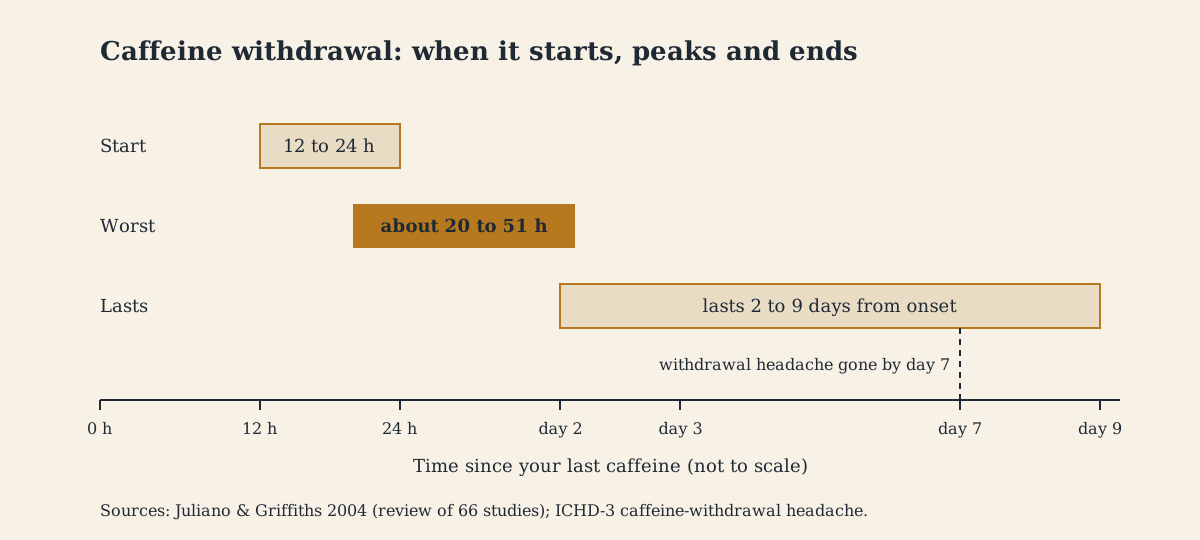
Caffeine withdrawal symptoms usually start 12 to 24 hours after your last dose, hit hardest between about 20 and 51 hours, and last 2 to 9 days. Headache is the classic one, and about half of people get it. Fatigue, drowsiness, low mood, irritability and a foggy head make up most of the rest. It isn't considered dangerous, and stepping down gradually can keep it mild.
Those figures come from a 2004 review of 66 studies by Juliano and Griffiths. In the controlled studies it pulled together, about 13% of people who stopped had symptoms bad enough to cause significant distress or get in the way of normal functioning. Caffeine withdrawal is also a recognised diagnosis in the DSM-5, the psychiatric diagnostic manual.
TL;DR
- Symptoms start 12 to 24 hours after your last caffeine, are worst at about 20 to 51 hours, and usually last 2 to 9 days.
- About half of people get a headache. Fatigue, drowsiness, low mood, irritability and brain fog are the other common ones.
- For the headache, take a caffeine-free painkiller as the label directs. If you must function today, 100 mg of caffeine can ease it within an hour, by the headache classification's definition.
- Cut down in steps. In a Johns Hopkins experiment, people on 300 mg a day didn't show withdrawal at 200 mg. It took a cut to 100 mg or less.
- Decaf, extra sleep and a short afternoon rest are the options for the flat days. Only decaf has been tested on withdrawal, in one small study.
Why caffeine withdrawal symptoms happen
Caffeine hides sleep pressure
Caffeine works by blocking adenosine receptors. Adenosine is a molecule that builds up the longer you're awake and makes you feel sleepy. With caffeine in the way, you don't feel the sleepiness, but the adenosine keeps building.
Stanford neuroscientist Andrew Huberman explains it this way in his caffeine episode: "You're not really getting more energy. You're actually borrowing energy against an overall system that is frankly nonnegotiable." When a dose wears off, he says, "a backlog of adenosine" leaves you extra sleepy. That explains the slump after a single coffee. Withdrawal lasts days, which needs a second explanation.
Your brain probably adjusts to the daily dose
In mice fed caffeine for several weeks, the number of adenosine receptors in the brain went up. Human brains haven't been counted this way, but if people adapt the same way, stopping caffeine leaves extra receptors for adenosine to act on. That fits the drowsiness and fatigue of withdrawal.
Tolerance comes with that adaptation. A 2005 review by James and Rogers argued that in daily drinkers, most of the lift from the morning coffee is the coffee reversing mild withdrawal from a short break, such as the night before. The bigger your usual dose, the harder withdrawal tends to hit.
In US survey data from 2001 to 2010, 89% of adults consumed caffeine, and their usual intake was about 210 mg a day. Stopping as little as 100 mg a day, less than a typical mug of brewed coffee, has produced withdrawal in studies.
Why the headache happens
Daily caffeine lowers blood flow in the brain. When it stops, the blood vessels widen. In a 2022 Basel study, blood flow in the brain 36 hours after the last dose was higher than in the same people on placebo. That rebound is a likely source of the withdrawal headache, though the Basel study measured blood flow, not headaches.
The paraxanthine tail
Your liver turns roughly 80% of the caffeine you drink into paraxanthine, a related stimulant. In the same Basel study of 20 young men who usually had 300 to 600 mg a day and took 150 mg capsules three times a day, the median half-life was 4.3 hours for caffeine and 7.8 hours for paraxanthine. Paraxanthine was still above placebo levels 24 hours after the last dose, so the stimulant load doesn't end the moment you put the cup down. In healthy adults, caffeine's own half-life averages about 4 hours, with a range of 2 to 8 hours, according to EFSA (more on how long caffeine stays in your system).
How to diagnose caffeine withdrawal symptoms
Withdrawal is easy to mistake for a cold or a bad night's sleep. If the headache and fog start 12 to 24 hours after a skipped or smaller coffee, withdrawal is the first thing to check.
The most common symptoms
The 2004 review sorted 49 reported symptoms and found 10 with solid evidence behind them:
- Headache
- Fatigue
- Low energy
- Reduced alertness
- Drowsiness
- Feeling less content
- Depressed mood
- Difficulty concentrating
- Irritability
- Feeling foggy or not clear-headed
Flu-like feelings, nausea or vomiting, and muscle pain or stiffness were judged likely to belong on the list too.
The clearest single study ran in the New England Journal of Medicine in 1992. Silverman and colleagues took 62 adults who had about 235 mg a day, roughly 2.5 cups of coffee, and swapped their caffeine for identical placebo capsules for two days, without telling them which was which. During the caffeine-free days, 52% had a moderate or severe headache, against 2% at baseline. Around 1 in 10 scored abnormally high for depression or abnormally low for vigour. Anxiety showed up too, in 8%. Higher daily doses, and longer habits, bring more symptoms.
When symptoms appear and peak
Symptoms start 12 to 24 hours after your last caffeine. Peak intensity falls between about 20 and 51 hours. If your last coffee was Sunday morning, expect the worst of it from Monday into Tuesday, and keep that stretch free of anything that needs your sharpest thinking.
The headache has its own working definition in the International Headache Society's classification (ICHD-3). It applies to people who had more than 200 mg a day for over two weeks. The headache starts within 24 hours of the last caffeine. Then either it eases within an hour of 100 mg of caffeine, or it clears within 7 days of stopping completely, or both. If yours fits that pattern, withdrawal is the likely cause.
When to see a doctor
The FDA's summary is that "caffeine withdrawal isn't considered dangerous but can be unpleasant." A StatPearls clinical review notes it can mimic anxiety and mood disorders and come with abnormal vital signs. Get checked if:
- A headache starts suddenly and is extremely painful, or comes with loss of vision, numbness or weakness, confusion, or trouble speaking (the NHS treats these as emergencies)
- You have chest pain, palpitations or trouble breathing
- A headache is still there 7 days after you stopped, or other symptoms last beyond about 10 days
- Low mood or anxiety becomes severe
Tell the clinician how much caffeine you were having and when you stopped. If you're pregnant, have a heart condition or an anxiety disorder, or take regular medication, talk to your doctor before a big change in caffeine.
How to fix caffeine withdrawal symptoms: 6 solutions
Solution 1: Taper instead of stopping dead
The FDA advises cutting back gradually, and the one experiment on dose steps points the same way. In 1999, Evans and Griffiths kept volunteers on 300 mg a day, then quietly lowered the dose. A drop to 200 mg didn't bring on withdrawal in that experiment. It took a cut to 100 mg or less.
No trial has tested a particular taper schedule. A simple rule of thumb, not a tested schedule, is to cut about a quarter each week: from four mugs a day, three for a week, then two, one, half, none. Ways to make the steps:
- Mix half-caf: half regular beans, half decaf, then a quarter regular
- Swap coffee for black tea, then green tea (amounts below)
- Drop the afternoon cup first. A 2023 meta-analysis found coffee needs to be at least 8.8 hours before bed to avoid losing sleep
The daily total is what counts. In the same experiments, withdrawal looked no different whether 300 mg came in one morning dose or as 100 mg three times a day. If you plan to keep some caffeine, see how to time your caffeine for focus.
Solution 2: Keep the cup, switch to decaf
In a 2023 Sydney study, 61 heavy coffee drinkers went 24 hours without caffeine, then got decaf they knew was decaf, decaf they were told was regular, or water. On the study's withdrawal questionnaire, scores in the knowing-decaf group fell 9.5 points within 45 minutes, 8.9 more than with water. Decaf that people were told was regular coffee did better still, by another 8.6 points. That's one cup in one study, but it costs nothing to try and keeps the ritual. Decaf still carries 2 to 15 mg per 8 oz cup, far below the 100 mg a day that has caused withdrawal.
Solution 3: Replace the fluid you drop
In regular drinkers, coffee counts toward your fluids. In a 2014 trial, 50 men who usually drank 3 to 6 cups a day had four 200 mL coffees daily for three days, and their hydration matched the same amount of water. So if you cut four mugs, replace that volume with water, decaf or herbal tea. Extra water beyond that hasn't been tested for withdrawal.
Solution 4: Caffeine-free painkillers for the headache
The usual advice is a standard dose of ibuprofen or paracetamol (acetaminophen). Follow the label and don't make it a daily habit, because the NHS lists taking too many painkillers as a common cause of headaches. In the 1992 NEJM study, 13% reached for medication on the caffeine-free days, against 2% on caffeine.
Check the box first. Excedrin Extra Strength has 65 mg of caffeine per tablet, so the two-tablet dose is 130 mg, about as much as a small mug of brewed coffee. That's caffeine you're still taking, so it can delay the end of withdrawal.
If you stopped outright and need to function, a withdrawal headache can ease within an hour of 100 mg of caffeine, by the headache classification's definition. Then taper from there instead of going back to your old dose.
Solution 5: Rest through the slump with a nap or NSDR
The first few days bring drowsiness. If it piles onto the usual afternoon energy crash, plan a short rest for that window.
If you're short on sleep and can lie down, nap. In the one head-to-head trial, a 25-minute nap beat 10 minutes of NSDR on how ready people felt to perform. If you need to get straight back to work, try NSDR. You lie down for 10 to 20 minutes with a guided track and stay awake, so you get up without the grogginess a longer nap can leave. You can read up on what non-sleep deep rest is and how it compares in NSDR vs napping. Nobody has studied NSDR for caffeine withdrawal, so treat it as a way to rest without a coffee.
Solution 6: Protect your sleep
You'll be sleepier for a few days, so go to bed earlier. Keep the same wake time, a cool dark room and screens off for the last hour. Basic sleep habits matter more this week, because no morning coffee will cover a short night.
How to prevent caffeine withdrawal in the future
Dependence builds in days
In the Evans and Griffiths experiments, withdrawal appeared after only three days in a row of 300 mg, and was a little worse after 7 or 14 days. Higher daily doses made it stronger.
Every other day is Huberman's idea, and it's untested
Huberman calls an every-other-day schedule "the most rational one" for getting caffeine's performance effects without the withdrawal. Nobody has tested it in a trial. What is known is that tolerance builds with daily use, which is the logic behind the idea.
Know your caffeine sources
Typical amounts in a 12 oz drink, from the FDA:
- Brewed coffee: 113 to 247 mg
- Energy drink: 41 to 246 mg
- Soft drink: 23 to 83 mg
- Black tea: 71 mg
- Green tea: 37 mg
Caffeine also turns up in chocolate, protein bars, ice cream, chewing gum, dietary supplements and some painkillers. Read the labels, because a 100 mg daily habit can already cause withdrawal.
The habit is part of it
Huberman puts it this way: "Caffeine is not just a stimulant. Caffeine is a reinforcer." In his account, caffeine makes you like the drink, the mug and even the company you have it with. The 2004 review adds that avoiding withdrawal is itself a central reason people keep drinking it daily. Keep the parts of the ritual you enjoy, like the mid-morning break, and change what's in the cup.
FAQ
How long does caffeine withdrawal last?
Caffeine withdrawal symptoms usually last 2 to 9 days. They start 12 to 24 hours after your last dose and peak at about 20 to 51 hours, so the second day is often the hardest. A withdrawal headache clears within 7 days of stopping completely.
What is the fastest way to recover from caffeine withdrawal?
For quick relief, take a caffeine-free painkiller for the headache, get more sleep and rest in the afternoon. If you need to function, the headache classification's definition says a withdrawal headache can ease within an hour of 100 mg of caffeine. Then taper from there.
Can caffeine withdrawal cause anxiety?
Caffeine withdrawal can cause anxiety in a minority of people. In the 1992 NEJM study, 8% scored abnormally high for anxiety during the caffeine-free days, against none at baseline. Anxiety didn't make the 2004 review's list of 10 well-validated symptoms, so the evidence for it is weaker than for headache or fatigue.
Is caffeine withdrawal serious or dangerous?
Caffeine withdrawal is unpleasant but not considered dangerous, in the FDA's words, though about 13% of people in controlled studies had symptoms that disrupted their day. See a doctor for a sudden severe headache, chest pain, palpitations, or symptoms that outlast the usual 2 to 9 days.
Should I quit caffeine cold turkey or taper?
Tapering is the FDA's advice. Quitting cold turkey is over in about 2 to 9 days but puts you through the full withdrawal. In the Johns Hopkins experiments, a one-third cut from 300 to 200 mg didn't bring on withdrawal. It took a cut to 100 mg or less. No trial has compared the two for long-term success.
Sources
- Juliano LM, Griffiths RR (2004). A critical review of caffeine withdrawal: empirical validation of symptoms and signs, incidence, severity, and associated features. Psychopharmacology. https://pubmed.ncbi.nlm.nih.gov/15448977/
- Silverman K, Evans SM, Strain EC, Griffiths RR (1992). Withdrawal syndrome after the double-blind cessation of caffeine consumption. New England Journal of Medicine. https://pubmed.ncbi.nlm.nih.gov/1528206/
- Evans SM, Griffiths RR (1999). Caffeine withdrawal: a parametric analysis of caffeine dosing conditions. Journal of Pharmacology and Experimental Therapeutics. https://pubmed.ncbi.nlm.nih.gov/10087016/
- Lin YS, Weibel J, Landolt HP, et al. (2021). Daily caffeine intake induces concentration-dependent medial temporal plasticity in humans: a multimodal double-blind randomized controlled trial. Cerebral Cortex. https://pubmed.ncbi.nlm.nih.gov/33585896/
- Lin YS, Weibel J, Landolt HP, et al. (2022). Time to recover from daily caffeine intake. Frontiers in Nutrition. https://pubmed.ncbi.nlm.nih.gov/35187019/
- Lelo A, Miners JO, Robson RA, Birkett DJ (1986). Quantitative assessment of caffeine partial clearances in man. British Journal of Clinical Pharmacology. https://pubmed.ncbi.nlm.nih.gov/3756066/
- Boulenger JP, Patel J, Post RM, Parma AM, Marangos PJ (1983). Chronic caffeine consumption increases the number of brain adenosine receptors. Life Sciences. https://pubmed.ncbi.nlm.nih.gov/6298543/
- James JE, Rogers PJ (2005). Effects of caffeine on performance and mood: withdrawal reversal is the most plausible explanation. Psychopharmacology. https://pubmed.ncbi.nlm.nih.gov/16001109/
- McLellan TM, Caldwell JA, Lieberman HR (2016). A review of caffeine's effects on cognitive, physical and occupational performance. Neuroscience & Biobehavioral Reviews. https://pubmed.ncbi.nlm.nih.gov/27612937/
- Fulgoni VL 3rd, Keast DR, Lieberman HR (2015). Trends in intake and sources of caffeine in the diets of US adults: 2001-2010. American Journal of Clinical Nutrition. https://pubmed.ncbi.nlm.nih.gov/25832334/
- Mills L, Lee JC, Boakes R, Colagiuri B (2023). Reduction in caffeine withdrawal after open-label decaffeinated coffee. Journal of Psychopharmacology. https://pubmed.ncbi.nlm.nih.gov/36628993/
- Killer SC, Blannin AK, Jeukendrup AE (2014). No evidence of dehydration with moderate daily coffee intake: a counterbalanced cross-over study in a free-living population. PLoS One. https://pubmed.ncbi.nlm.nih.gov/24416202/
- Boukhris O, Suppiah H, Driller M (2026). Comparing the effects of a short nap and non-sleep deep rest on perceptual, cognitive, and physical performance in active adults. Clocks & Sleep. https://pubmed.ncbi.nlm.nih.gov/42783005/
- Rocha Cabrero F, Hamilton RJ. Caffeine withdrawal. StatPearls (NCBI Bookshelf). https://www.ncbi.nlm.nih.gov/books/NBK430790/
- International Headache Society. ICHD-3, 8.3.1 Caffeine-withdrawal headache. https://ichd-3.org/8-headache-attributed-to-a-substance-or-its-withdrawal/8-3-headache-attributed-to-substance-withdrawal/8-3-1-caffeine-withdrawal-headache/
- US Food and Drug Administration (2024). Spilling the beans: how much caffeine is too much? https://www.fda.gov/consumers/consumer-updates/spilling-beans-how-much-caffeine-too-much
- Excedrin Extra Strength product information (Haleon). https://www.excedrin.com/products/extra-strength
- EFSA (2015). Caffeine: EFSA explains risk assessment. https://www.efsa.europa.eu/sites/default/files/corporate_publications/files/efsaexplainscaffeine150527.pdf
- Gardiner C, Weakley J, Burke LM, et al. (2023). The effect of caffeine on subsequent sleep: a systematic review and meta-analysis. Sleep Medicine Reviews. https://pubmed.ncbi.nlm.nih.gov/36870101/
- NHS. Headaches. https://www.nhs.uk/conditions/headaches/
- Huberman A. Using caffeine to optimize mental & physical performance. Huberman Lab podcast. https://www.hubermanlab.com/episode/using-caffeine-to-optimize-mental-and-physical-performance